


After the success of the Vande Bharat Express, Indian Railways is preparing its next major step in high-speed rail travel. The Railway Board has cleared the production of two new trainsets designed for speeds up to 220 kmph, marking a significant push towards semi-high-speed connectivity in the country.
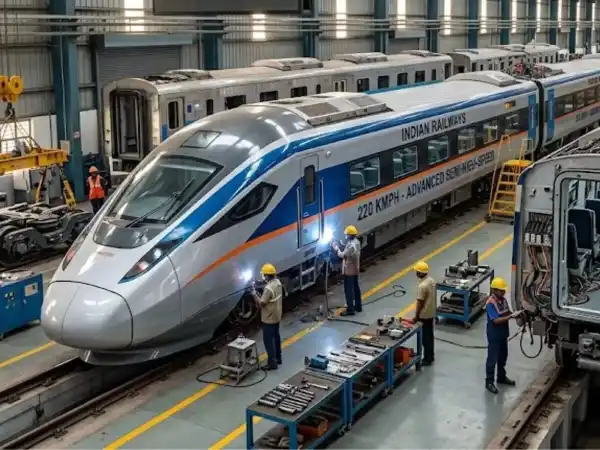
These next-generation trains are expected to surpass current speed benchmarks while offering upgraded passenger comfort and modern onboard systems.
As part of the Coach Production Programme for 2027–28, the approval has been issued to the Integral Coach Factory in Chennai. Each trainset will consist of 16 broad-gauge coaches.
At present, Vande Bharat Express remains India’s fastest operational train with a design speed of 180 kmph. The new trains will raise the bar further with a design speed of 220 kmph and an operational limit of around 200 kmph, bringing India closer to global semi-high-speed standards.
The project is already in motion under a Make in India framework. In October 2024, the Integral Coach Factory awarded a contract to BEML to design and manufacture two high-speed trainsets. Initially configured with 8 coaches each, the deal is valued at nearly ₹866.87 crore, including development, tooling, and testing costs.
These trains will feature steel-bodied coaches, full air-conditioning, reclining seats, and upgraded passenger information systems aimed at improving comfort during high-speed travel.
The initiative forms part of a broader modernisation drive within Indian Railways. Currently, India has no regular services operating above 200 kmph due to infrastructure limits, with most trains capped at around 160 kmph. The introduction of these trainsets, along with planned upgrades to testing infrastructure, signals a clear move toward faster rail travel in the coming years.
