


Military analysts are debating the fallout from the United Arab Emirates’ sudden exit from the Rafale F5 fighter jet program, which leaves France solely responsible for funding the next-generation aircraft. The split reportedly stems from disagreements over technology sharing, with Paris refusing to grant Abu Dhabi access to sensitive optronics systems. The UAE had planned to contribute €3.5 billion toward the estimated €5 billion development cost.
The withdrawal follows a tense meeting between French President Emmanuel Macron and UAE President Sheikh Mohamed bin Zayed and is expected to delay the project’s timeline. Beyond finances, the decision has geopolitical implications, as France considers the UAE a key ally in the Arabian Peninsula, hosting military installations and supplying the country with advanced jets, naval vessels, missiles, and defense networks.
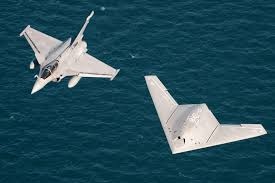
The Rafale F5 is a major technological leap, set for deployment between 2033 and 2035. It will feature upgraded sensors, advanced electronic warfare suites, sophisticated communications, and the ability to command unmanned combat drones known as “loyal wingmen.” It will also carry France’s future ASN4G hypersonic nuclear missile, solidifying its role as a strategic deterrent.
With the UAE’s exit, France faces the full €5 billion cost alone, pushing the total Rafale program investment to roughly €11.7 billion. This strain could slow the F5’s development and stretch the French defense budget.
Meanwhile, India’s position in the Rafale program has strengthened. The Defence Acquisition Council recently approved a historic ₹3.25 lakh crore ($40 billion) purchase of 114 French-made Rafales under the Multi-Role Fighter Aircraft (MRFA) program. These jets will be produced domestically under the “Make in India” initiative and are planned to incorporate F5-level upgrades in the future.
By combining this order with its existing 36 Air Force Rafales and 26 upcoming naval variants, India provides Dassault Aviation with a secure, long-term production pipeline. While India does not fund the F5’s foundational research, its investments in India-Specific Enhancements—like radar upgrades and drone integration—align closely with F5 capabilities. Unlike the UAE, India acts as a commercial anchor rather than a partner demanding access to proprietary technology.
This arrangement allows France to safeguard its critical F5 secrets while India secures next-generation capabilities without bearing development risk. Local assembly lines under joint ventures will further boost India’s aerospace industry and employment. By the mid-2030s, the Indian Air Force is set to receive F5-level fighter capabilities, including drone teaming and advanced strike systems.
While the UAE’s withdrawal may slightly delay the overall F5 program, India’s multi-billion-dollar commitment provides economic stability for Dassault. It highlights how major international buyers like India have become essential to sustaining advanced European defense projects, ensuring both technological progress and long-term strategic advantage.
