


As NASA’s Artemis II mission heads toward the Moon, the astronauts have enjoyed a mostly smooth test flight—except for one surprising hurdle: the Orion spacecraft’s toilet.
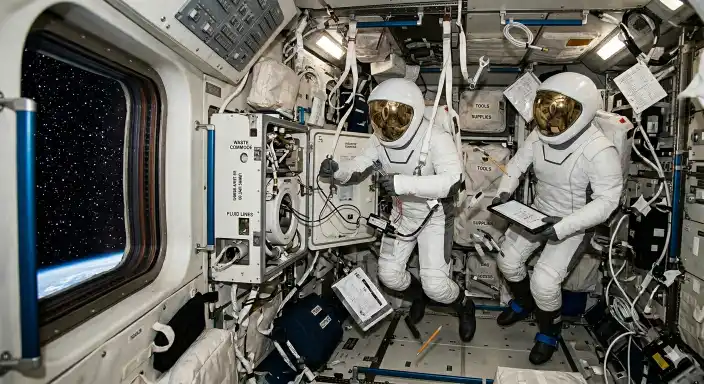
The capsule, built by Lockheed Martin, is equipped with the Universal Waste Management System (UWMS), similar to the toilets used on the International Space Station. Designed for microgravity, the system relies on airflow to move waste, while astronauts use footstraps and handles to stay in position.
Trouble began on the first day in orbit when the toilet’s pump failed to function properly. Mission specialist Christina Koch, jokingly dubbed the “space plumber,” fixed the system with support from Mission Control after identifying that the pump needed extra water to prime it.
Later, a wastewater dump stopped prematurely, likely due to ice blocking the vent nozzle. NASA temporarily prohibited the crew from urinating in the toilet, though solid waste continued to be collected in water-tight bags. As a backup, astronauts used collapsible contingency urinals.
To resolve the issue, NASA repositioned Orion so sunlight could warm the vent and melt the ice. Subsequent tests confirmed the system was fully operational, allowing the crew to resume all normal toilet functions.
Space toilets have long presented challenges. In 1984, during the Space Shuttle STS-41-D mission, astronauts had to rely on backup bags due to ice buildup blocking the vent.
NASA Administrator Jared Isaacman noted that while astronauts can accomplish remarkable feats in space, life-support systems like waste management remain critical challenges.
