


Prime Minister Narendra Modi spoke with Masoud Pezeshkian to discuss the worsening situation in West Asia. In a post on X, PM Modi said the conversation focused on the “serious situation” unfolding in the region, expressing concern over rising tensions, civilian casualties, and damage to infrastructure.
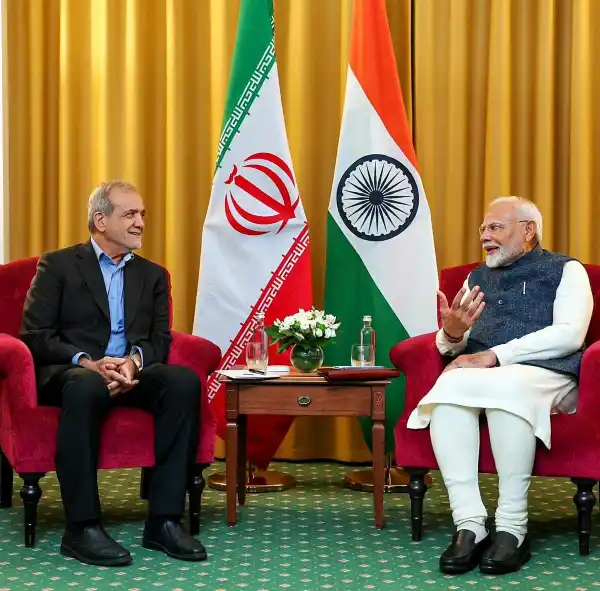
This marked PM Modi’s first direct discussion with an Iranian leader since the outbreak of the war following joint United States-Israel attacks on Iran on February 28. Earlier, S. Jaishankar had spoken with Iran’s foreign minister, Abbas Araghchi.
During the call, PM Modi highlighted India’s priorities: the safety and security of Indian nationals and the need to ensure uninterrupted transit of goods and energy. He reaffirmed India’s commitment to peace and stability, urging dialogue and diplomacy as the way forward.
Before speaking with President Pezeshkian, PM Modi had consulted leaders from the United Arab Emirates, Oman, Kuwait, and Qatar to review the evolving situation.
The discussion came hours after Iran’s newly appointed Supreme Leader, Mojtaba Khamenei, issued his first public statement. He stressed the strategic leverage of the Strait of Hormuz and indicated that Iran’s attacks on Gulf neighbors would continue following his father’s death in the US-Israel strikes.
The conflict has already pushed oil prices above $100 a barrel, as Iran continues targeting shipping and energy infrastructure in the Persian Gulf while American and Israeli strikes hit Iranian targets, with no immediate end to hostilities in sight.
Amid the escalation, Iranian President Pezeshkian signaled willingness to de-escalate under certain conditions, telling regional leaders, including those of Russia and Pakistan, that Iran remains committed to regional peace if dialogue is respected.
