


Amid reports of cooking gas shortages across India, the central government announced on Thursday that oil marketing companies (OMCs), in coordination with state governments, will allocate 20% of the average monthly commercial LPG requirement starting 12 March. The move aims to prevent hoarding and black marketing.
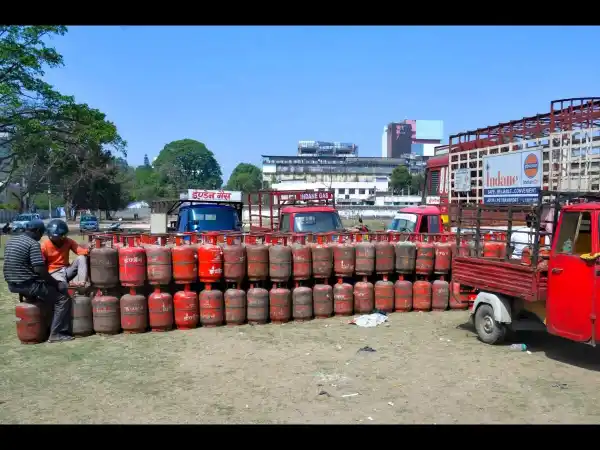
Union Petroleum and Natural Gas Minister Hardeep Singh Puri made the announcement in the Lok Sabha, emphasizing that the regulation is intended to manage supply rather than penalize the hospitality sector. Commercial LPG is sold in a fully deregulated, over-the-counter market at market prices, without government subsidies, registrations, or delivery tracking.
The decision comes against the backdrop of global energy supply disruptions following the ongoing conflict involving the US, Israel, and Iran in West Asia. India’s domestic natural gas production stands at around 90 MMSCMD (million metric standard cubic metres per day), with an additional 30 MMSCMD previously imported from Gulf sources now affected by force majeure at a major Qatari facility.
Earlier, on 9 March, the Oil Ministry issued the Natural Gas Control Order under the Essential Commodities Act, prioritizing supplies: domestic piped gas (PNG) and CNG for vehicles will receive full supply; industrial and manufacturing users up to 80% of their six-month average; and fertiliser plants up to 70%.
Puri also noted that large LNG cargoes are arriving almost daily via alternative routes, ensuring that India has sufficient gas production and supply even if the conflict continues. He described the situation as unprecedented, with the Strait of Hormuz—through which 20% of the world’s crude, natural gas, and LPG flows—effectively closed to commercial shipping for the first time in recorded history.
Despite the global disruption, Puri assured that India’s crude oil supplies remain secure. Before the Middle East crisis, around 45% of India’s crude imports passed through the Strait of Hormuz, but today India sources crude from 40 countries, up from 27 in 2006–07. Refineries are operating at high capacity, and there is no shortage of petrol, diesel, kerosene, aviation turbine fuel, or fuel oil. Retail outlets across the country are fully stocked, and supply chains continue to function normally.
