


The Centre is preparing a ₹9,280 crore scheme to partially fund the development of water metro systems across India, in partnership with state governments and private players. The initiative aims to utilise India’s rivers, canals, lakes, backwaters, estuaries, creeks, and coastal waters to ease road congestion and promote sustainable urban transport. This proposal forms part of the draft National Water Metro Policy 2026 prepared by the Ministry of Ports, Shipping and Waterways.
Connecting Cities and Islands
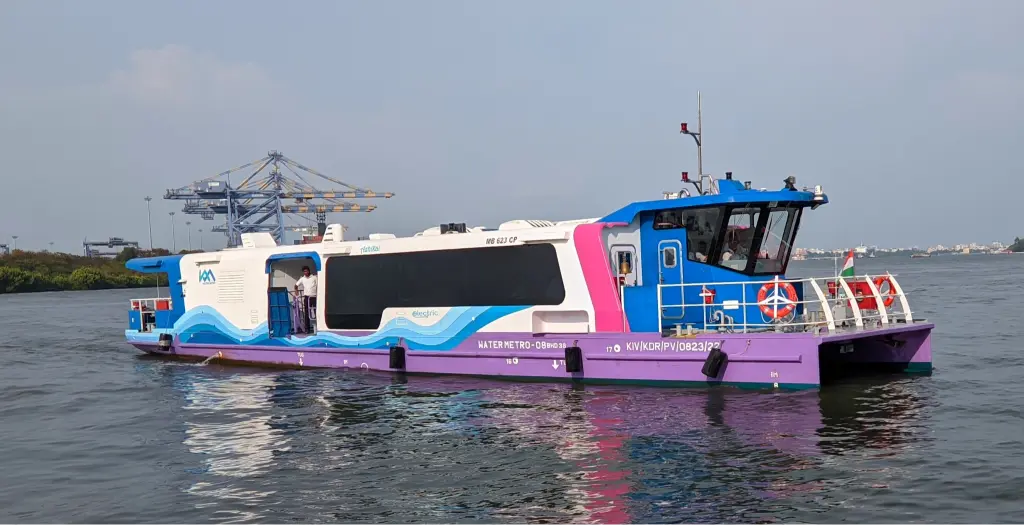
Water metro projects will link city centres with nearby areas and islands, catering to daily passenger travel, tourism, and integration with other transport modes. A water metro is a mass passenger transport system operating on inland or coastal waterways, capable of carrying people and, where needed, vehicles. The services will rely on modern, standardised vessels equipped with safety, accessibility, and environmental protection features, forming an organised public transport network. Currently, Kochi hosts India’s only operating water metro.
Feasibility and Budget
In February 2025, the Inland Waterways Authority of India (IWAI) commissioned feasibility studies for water metro systems in 18 cities based on urban scale, navigable waterways, and existing ferry usage. Each project is estimated to cost ₹800–1,300 crore, bringing total capital expenditure to roughly ₹18,594 crore. The scheme will run for 10 years from April 2026, with the Centre contributing 50% of the capital cost, amounting to ₹9,280 crore.
Funding and State Responsibilities
Funding models include shared Centre-state contributions for EPC (engineering, procurement, construction) and PPP projects. State governments will provide Viability Gap Funding (VGF) to city-level Special Purpose Vehicles (SPVs), supply land for development, and cover acquisition costs. Maintenance will remain with the states, while the Ministry of Ports, Shipping and Waterways will act as nodal authority, with IWAI responsible for technical standards, vessel specifications, and operational guidelines.
City-Level Implementation
Each city will establish a joint Centre-state SPV to implement the projects. The SPV will oversee infrastructure development via EPC, PPP, or hybrid models, and manage operations either in-house or through O&M contracts. Fare structures will be set by the SPV within applicable regulatory frameworks. Multiple models are proposed to accommodate project complexity and private sector participation, including:
- Model 1A: EPC-based infrastructure with in-house operations, funded equally by Centre and state; operational VGF borne by the state.
- Model 1B: EPC infrastructure with private O&M contract; capital shared equally, operational VGF borne by the state.
- Model 2: Full PPP for infrastructure and O&M; Centre and state share VGF for capital, state covers operational VGF.
- Model 3: SPV-led EPC infrastructure, PPP for vessels and O&M; capital and vessel VGF shared, operational VGF borne by the state.
State governments or IWAI will select the implementation model and undertake dredging and fairway maintenance for waterways outside national waterways.
Infrastructure and Sustainability
The scheme will cover civil infrastructure (terminals, access roads, pontoons, operation control centers), marine infrastructure (boats, dredgers, emergency vessels), navigational aids, and sustainable development measures such as solar farms, water harvesting, electric feeders, weed harvesting, bicycle sharing, walkways, and disaster resilience initiatives. Vessels will be electric or hybrid, indigenously designed, and built by Indian shipyards, with standardised designs and bulk procurement to achieve economies of scale and progressively localise components.
Promoting Sustainable Urban Transport
The water metro initiative aims to provide an alternative to road-based transport, reducing congestion, fossil fuel use, and pollution. Rapid urbanisation and population growth have created transport challenges, including limited land for new infrastructure. Water metros utilise existing waterways to deliver efficient, safe, cost-effective, and environmentally sustainable urban mobility.
Integration with Urban Transit Systems
Currently, urban transport relies mainly on MRTS frameworks such as BRTS, LRT, tramways, metro rail, and regional rail, with inland water transport largely outside formal public transit. The new policy would integrate waterways into urban transport planning, creating a standardised, safe, and technically efficient system with green propulsion technologies. IWAI will provide expertise in project identification, vessel specifications, and safety oversight to ensure coordinated development across cities.
Flexible Implementation Models
The draft policy outlines multiple funding and operational models, including joint Centre-state funding, fully state-funded, PPP-led, and Centre-funded projects. Support mechanisms like VGF and central sector schemes will facilitate project viability, allowing cities to adopt the model best suited to their needs.
