


India is advancing its high-speed rail ambitions with the development of its first indigenous bullet train at Bharat Earth Movers Limited’s (BEML) facility in Bengaluru, Karnataka. The B28 train is being designed for the Mumbai–Ahmedabad High-Speed Rail corridor, with a focus on domestic engineering, passenger comfort, accessibility and energy efficiency.
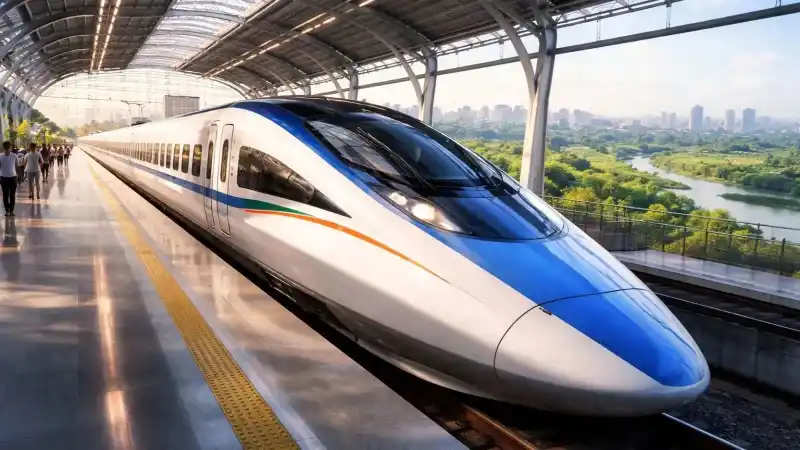
The train is designed to operate at 249 kmph, with a maximum test speed of 280 kmph. It will be approximately 202 metres long and feature eight coaches, comprising four motor cars and four trailer cars. The trainset will accommodate around 557 passengers, including two designated spaces for passengers with reduced mobility.
Seating and Passenger Comfort
The eight-coach configuration will include seven standard-class coaches with 3×2 seating and one executive-class coach with 2×2 seating. The train will feature ergonomically designed seats, legroom, LED lighting, overhead luggage racks and additional storage stands for larger bags.
Passengers will also have access to charging points for mobile phones and laptops, bio-digester toilets and wide windows. A sealed gangway between coaches will allow passengers to move through the train more comfortably.
LCD screens will provide passenger information in English, Hindi and regional languages. Public announcements and automatic audio announcements will offer additional guidance. Emergency talk-back units will allow passengers to contact train crew when necessary, while a Wi-Fi-based infotainment system will provide access to preloaded entertainment.
Accessibility Features
The train incorporates features designed to make high-speed travel more accessible. Its floor is aligned with platform height to support easier boarding, while retractable steps are intended to reduce the gap between the train and the platform.
Wheelchair-friendly doors, designated seating, accessible toilets and Braille signage are also part of the design. Two designated spaces will be available for passengers with reduced mobility.

Aerodynamics and Energy Efficiency
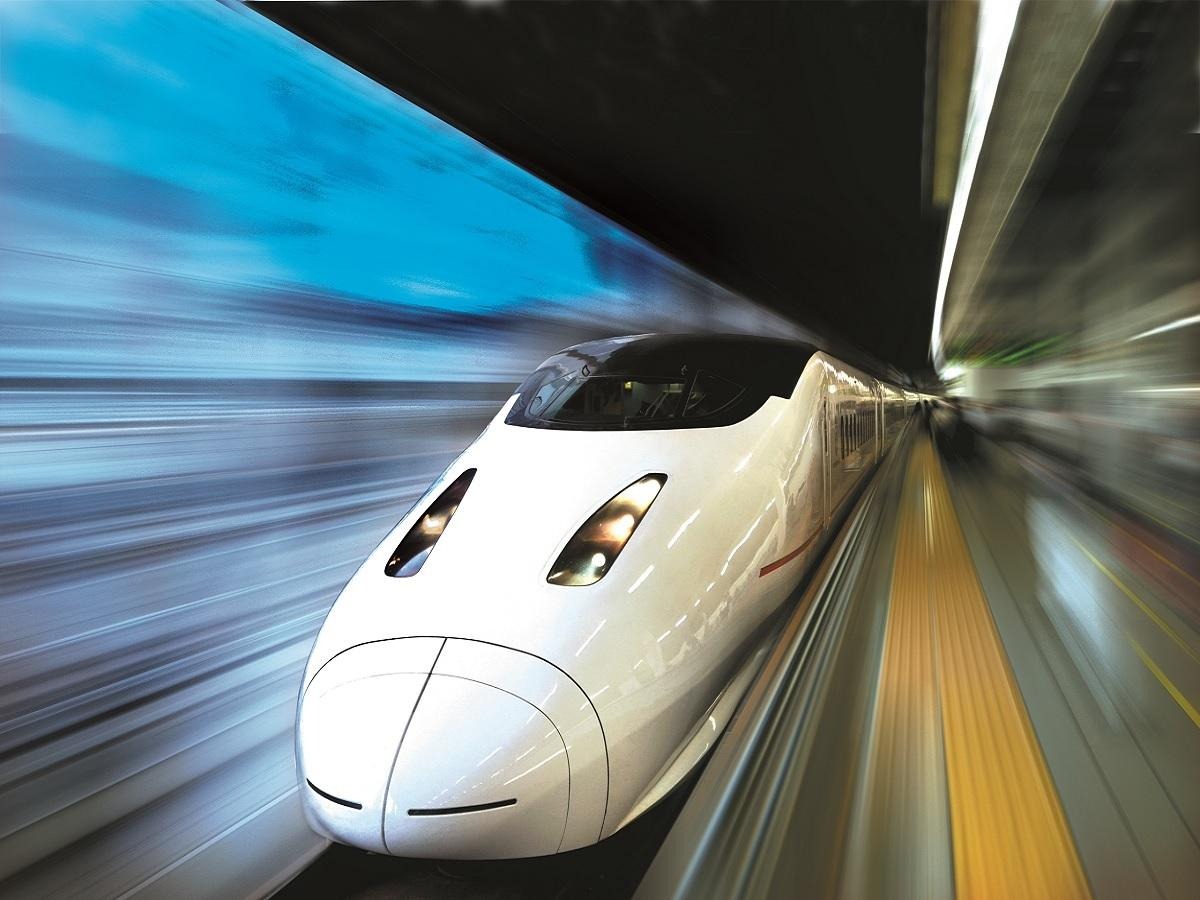
The B28 train’s nose and body profile have been optimised using Computational Fluid Dynamics simulations to improve airflow at high speeds. The aerodynamic design aims to reduce air resistance, turbulence and pressure waves inside tunnels.
The train will operate on a 25 kV, 50 Hz single-phase AC traction system. It will also use regenerative braking, which recovers some energy during braking and can improve overall energy efficiency.
Noise-control measures include sound insulation, noise-damping coatings and specially designed components around the bogies and underbody. Each coach will have two heating, ventilation and air-conditioning units to maintain comfortable temperature and humidity levels.
Expandable Train Configuration
The train will initially operate in an eight-coach configuration. Two trainsets can be coupled to form a 16-coach train, allowing capacity to be increased to meet future demand.
The indigenous train is being developed for the Mumbai–Ahmedabad corridor, a 508-kilometre high-speed rail project connecting Maharashtra and Gujarat. The corridor is planned to connect Mumbai and Ahmedabad through 12 stations.
The development of the B28 train represents a step towards building domestic capabilities in high-speed rail technology. Its eventual deployment will depend on manufacturing progress, testing, certification and the readiness of the corridor.
