


India expects private-sector investment of around ₹7.5 lakh crore in nuclear power as the country works towards achieving 100 gigawatts (GW) of nuclear energy capacity by 2047. Private companies are expected to contribute 30 GW to the overall target, Atomic Energy Commission Chairman Ajit Kumar Mohanty said on October 11, 2026.
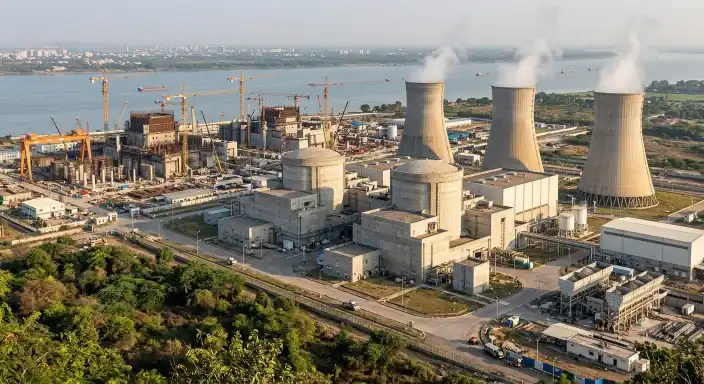
India currently has about 8.78 GW of installed nuclear power capacity. The planned expansion aims to increase the availability of reliable, low-carbon electricity and support the country’s long-term energy security and development goals.
Private Sector to Add 30 GW
The government is seeking greater participation from private companies to accelerate nuclear power development. According to Mohanty, private players are expected to contribute approximately 30 GW by 2047, while the public sector will continue to play a major role in the expansion.
The entry of private companies follows the enactment of the Sustainable Harnessing and Advancement of Nuclear Energy for Transforming India (SHANTI) Act, 2025, which provides a framework for wider participation in nuclear power generation.
Mohanty also indicated that a couple of private-sector companies could be operating nuclear reactors within the next five years, marking a potential shift in India’s traditionally public-sector-led nuclear industry.
India’s Nuclear Capacity Expansion
India plans to expand its nuclear power capacity through indigenous pressurised heavy water reactors, large reactors at new sites and the development of small modular reactors (SMRs).
The Department of Atomic Energy’s roadmap projects nuclear capacity reaching around 22 GW by 2031–32 as projects currently under implementation are completed. The longer-term goal is to reach 100 GW by 2047.
Focus on Clean Energy and Energy Security
Nuclear power provides low-carbon electricity that can operate independently of weather conditions, complementing renewable sources such as solar and wind. Expanding nuclear generation could help meet India’s growing electricity demand while reducing reliance on fossil fuels.
The proposed investment would also create opportunities across engineering, equipment manufacturing, construction, technology and other parts of the nuclear supply chain. However, achieving the target will depend on financing, project execution, regulatory approvals, technology development and the timely construction of new reactors.
