


Former Indian Army chief General Ved Prakash Malik has raised national security concerns over India’s potential dependence on foreign-owned telecommunications systems, as Elon Musk’s satellite internet company Starlink seeks to begin commercial operations in the country.
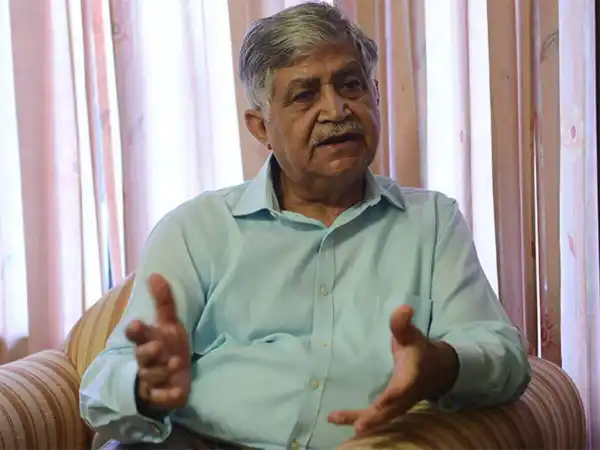
In a post on X on October 11, Malik referred to US sanctions imposed during the Kargil War and recent American trade restrictions to explain his concerns about relying on foreign-controlled communications infrastructure.
“With concern for national security, and my experience of defence sanctions imposed by USA during the Kargil war period and tariff and other restrictions imposed by US recently, I would not like to depend on any foreign-owned telecom system in India,” Malik wrote.
Malik served as Chief of the Army Staff from October 1997 to September 2000 and led the Indian Army during the 1999 Kargil War.
National Security and Technology Control
The concerns extend beyond competition in India’s telecom market to questions about control over technology, network access and data. Defence experts have questioned whether a foreign company could restrict or interrupt services during a geopolitical crisis, particularly if critical communications systems depended heavily on its network.
Starlink, operated by SpaceX, uses a network of low Earth orbit satellites to provide broadband internet connectivity. Its services could help connect remote and underserved areas, but its proposed entry into India has prompted debate over strategic dependence and technological sovereignty.
Starlink Awaits Commercial Rollout
Starlink has been seeking to launch its satellite internet services in India. However, commercial operations remain subject to applicable security clearances and regulatory requirements.
Union Communications Minister Jyotiraditya Scindia has said that security compliance decisions rest with the Ministry of Home Affairs. The government has also rejected allegations that it is delaying Starlink’s entry to protect existing telecom operators.
Starlink has partnerships with Reliance Jio and Bharti Airtel, which could help support its proposed Indian operations.
Balancing Connectivity and Sovereignty
The debate highlights the challenge of expanding satellite internet access while protecting national security and maintaining control over critical communications infrastructure. As satellite broadband becomes increasingly important for remote connectivity and emergency communications, India faces questions about how to balance access to global technology with safeguards for strategic independence.
