


The National Highways Authority of India (NHAI) has invested around ₹19,700 crore in wildlife mitigation infrastructure and environmental protection measures along national highways over the past five years. The initiative aims to balance road development with wildlife conservation and improve safety for both animals and motorists.
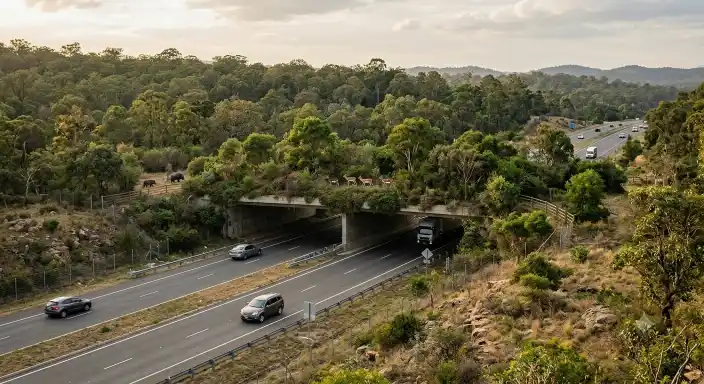
According to a document released by NHAI during National Wildlife Week 2026, more than 2,150 wildlife mitigation structures have been constructed or proposed across the country. These include animal underpasses, overpasses, culverts, canopy crossings, tunnels and bridges designed to allow animals to move safely across highway corridors.
The investment includes approximately ₹4,600 crore for animal underpasses, ₹650 crore for animal overpasses, ₹8,300 crore for viaducts, ₹2,800 crore for tunnels, ₹2,500 crore for major bridges and ₹500 crore for minor bridges. These structures are intended to reduce habitat fragmentation and minimise wildlife-vehicle collisions.
NHAI has also introduced non-structural measures such as fencing, noise barriers, wildlife signage and speed regulation. Guide fencing and noise barriers have been installed along more than 300 km of national highway alignments to direct animals towards designated crossing points and reduce the risk of accidents.
The authority is using monitoring systems, including camera traps, to study wildlife movement and evaluate the effectiveness of mitigation measures. Areas with frequent wildlife-vehicle collisions are identified for targeted interventions.
Union Road Transport and Highways Minister Nitin Gadkari released the document, titled Wildlife Mitigation Measures & Structures, during the Chintan Shivir in Ekta Nagar, Gujarat. The report outlines a framework for incorporating wildlife protection into highway planning, design and construction.
As India expands its national highway network, the measures are intended to protect biodiversity while supporting road connectivity and transport infrastructure development.
