


India and Switzerland have agreed to deepen cooperation across trade, investment, technology, defence, infrastructure and nuclear energy following talks between Prime Minister Narendra Modi and Swiss President Guy Parmelin in New Delhi. The two countries also signed five agreements covering areas including migration and mobility, young professionals, transportation technologies and infrastructure.
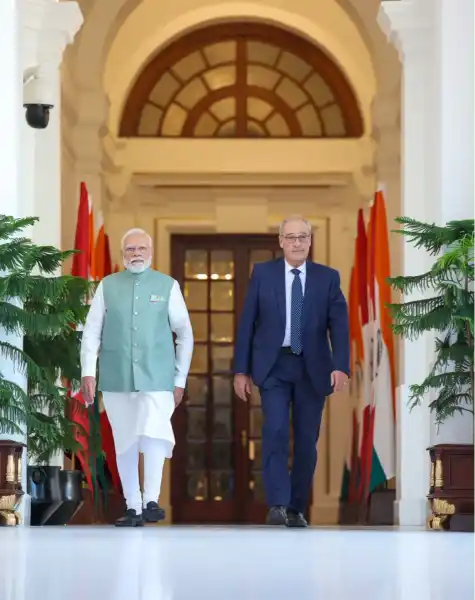
A key focus of the discussions was expanding market access for Indian exports and encouraging greater Swiss investment in India. The partnership builds on the Trade and Economic Partnership Agreement between India and the European Free Trade Association (EFTA), which includes Switzerland, Norway, Iceland and Liechtenstein.
Under the TEPA framework, India and EFTA aim to facilitate $100 billion in investment in India and support the creation of one million direct jobs over 15 years. India expects the partnership to boost exports of agriculture, pharmaceuticals, textiles and engineering goods, while attracting Swiss investment into sectors such as biotechnology, life sciences, banking, insurance, food processing and sustainability.
The two sides also agreed to explore stronger cooperation in defence production and military exchanges, while expanding collaboration in nuclear energy. Transport and infrastructure emerged as another important area, with Swiss companies being encouraged to participate in projects involving infrastructure development, design and manufacturing.
Science and technology cooperation is also set to expand, with joint research planned in areas including health, clean energy and space. Both countries are also looking to strengthen cooperation in artificial intelligence and responsible AI governance.
The agreements on migration and mobility and the exchange of young professionals are expected to create new opportunities for Indian students, researchers, professionals and young workers in Switzerland. The young professionals programme will initially allow the exchange of 300 people annually from each country, with the possibility of increasing the number to 500.
The visit comes as India and EFTA mark the first anniversary of their TEPA, with both sides seeking to turn the agreement into stronger trade, investment, technology and employment opportunities.
