


Indian Railways now has two alternative-fuel train technologies. The first LNG-diesel dual-fuel train was launched from Sabarmati in Gujarat on September 27, following the introduction of India’s first hydrogen-powered train in July 2026.
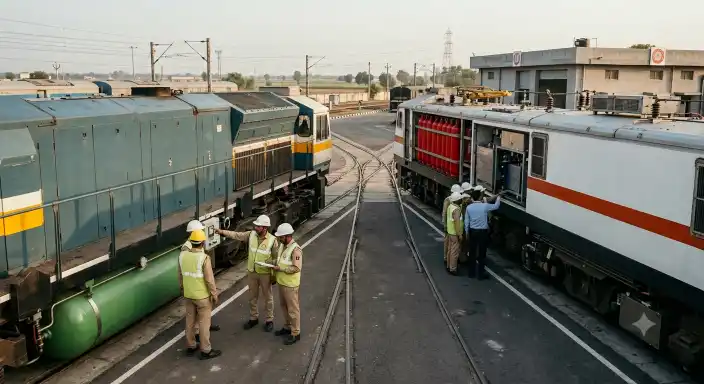
The LNG train uses a modified internal-combustion engine that can run on both LNG and diesel. Two 1,400 HP Driving Power Cars have been converted for the project. The system is designed to replace around 40% of diesel consumption with LNG. Each power car has an LNG tank of around 2,200 litres and an estimated range of about 444 km on a full LNG load.
The hydrogen train uses fuel-cell technology. Hydrogen reacts with oxygen to generate electricity for propulsion, with water vapour as the direct by-product. The 10-car train has two Hydrogen Driving Power Cars and a total power output of 2,400 kW.
The two technologies therefore differ in their propulsion systems and emissions profile. The LNG train continues to use an internal-combustion engine and diesel, while the hydrogen train uses fuel cells and produces water vapour as its direct emission. Both are being explored as alternatives to conventional diesel-powered railway operations.
