


The Defence Research and Development Organisation (DRDO) has introduced a new framework to help micro, small and medium enterprises (MSMEs) and deep-tech start-ups enter the defence research, development and manufacturing sector.
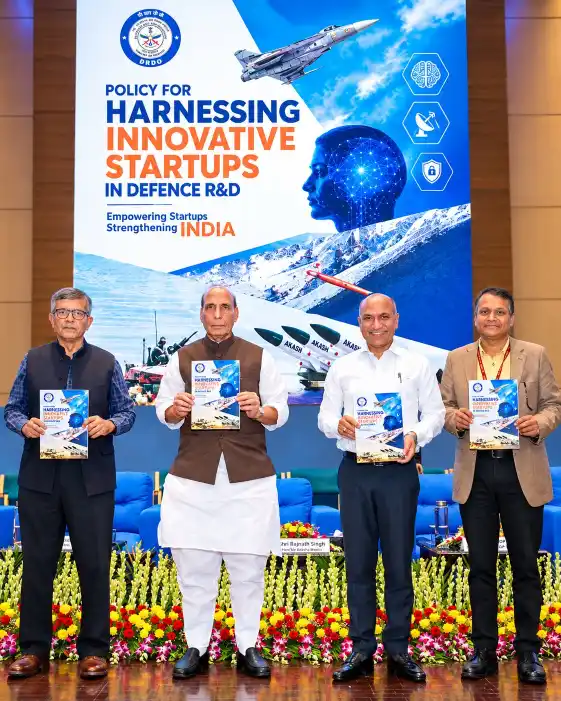
The initiatives were announced by Defence Minister Rajnath Singh at VIMARSH 2026, a DRDO-Industry Synergy Meet, held on September 15.
New Support for MSMEs and Start-ups
The framework is designed to reduce the technical and financial challenges faced by smaller companies seeking to work in defence technology.
It includes direct funding, incubation assistance and dedicated access to DRDO testing facilities. These measures are expected to support more private companies in developing and testing indigenous defence technologies.
Singh said cooperation between DRDO and industry should not be limited to manufacturing. He called for collaboration across the entire technology chain, including research, design, testing, certification and production.
Easier Access to Defence Technology
The DRDO has also introduced a secure and standardised system for sharing software source codes developed by the organisation with licensed industries.
The initiative is aimed at supporting software-based defence systems and helping companies respond more quickly to technological changes and obsolescence.
Nine Licensing Agreements for Transfer of Technology, or LAToTs, were handed over to 13 manufacturing partners during the event. The agreements will support the commercial production of advanced defence systems.
MoUs Signed to Expand Industry Participation
Strategic Memorandums of Understanding were exchanged with the Society of Indian Defence Manufacturers and Laghu Udyog Bharati.
The partnerships are intended to improve industry outreach and encourage more MSMEs and smaller enterprises to participate in defence research and manufacturing.
The DRDO also signed an agreement with the Quality Council of India for version 2.0 of the System for Advanced Manufacturing Assessment and Rating, known as SAMAR.
The programme will assess and benchmark the manufacturing capabilities and maturity of Indian defence companies.
Focus on Self Reliance and Defence Exports
Singh said India’s goal of becoming a developed nation by 2047 would require greater self-reliance in critical technologies.
He highlighted the need to increase indigenous content in defence equipment, expand defence exports and strengthen India’s role in global supply chains.
The minister also referred to government initiatives such as the Positive Indigenisation Lists, Make in India, iDEX and ADITI. He noted that the decision to allocate 25% of the defence research and development budget to the private sector had helped widen the defence innovation ecosystem.
Singh said companies investing in emerging technologies today could become future leaders in the defence sector.
DRDO Calls for Collaborative Technology Development
Defence Secretary and DRDO Chairman Rajesh Kumar Singh said VIMARSH 2026 was organised around the theme ‘Varta se Vikas’.
He said the event aimed to move the defence sector away from a simple buyer-seller relationship towards a model based on joint technology development.
More than 2,300 technology transfer agreements have so far been provided to over 1,100 industries, he said. Technologies linked to around 50 DRDO-developed missiles have also been made available to industry.
Defence Technology Roadmaps Discussed
The event brought together more than 250 industry leaders, government officials and DRDO scientists.
Discussions focused on technology absorption, Development-cum-Production Partner models and the faster induction of indigenous technologies into the armed forces.
Technical roadmaps were presented for several key areas, including aeronautical systems, missiles, armaments, microelectronics and naval systems.
The initiatives are aimed at increasing private-sector participation and creating a stronger industry-led ecosystem for defence research, innovation and manufacturing.
