


India is reportedly preparing to upgrade its Su-30MKI fighter fleet to integrate Russia’s R-37M very-long-range air-to-air missile, in a move that could significantly strengthen the Indian Air Force’s long-range aerial combat capabilities.
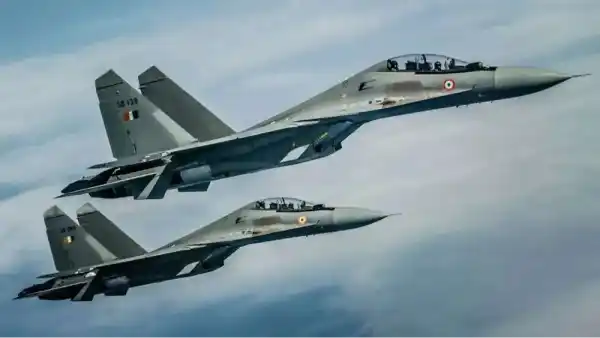
According to reports, the procurement is likely to include modifications required to make the missile compatible with the Indian fighter, including changes to its mission-control, radar and weapons-management software. Earlier reports have indicated a requirement for around 300 missiles.
The R-37M is designed for engaging high-value airborne targets from long distances. Its potential targets include AWACS and AEW&C aircraft, aerial tankers, electronic-warfare platforms and other support aircraft, rather than only enemy fighters.
For the Su-30MKI, integrating such a large missile will require more than simply adding a new weapon to its existing pylons. Radar detection and tracking, fire-control logic, mid-course guidance and weapons-management systems would need to work together with the missile.
The integration could also involve upgrades to the aircraft’s N011M Bars radar and mission computer, enhancing the Su-30MKI’s ability to detect, track and engage targets at extended ranges.
The exact operational range of the R-37M remains dependent on factors including launch altitude, aircraft speed, target movement and countermeasures. While open-source reports have cited ranges in the 200-km class, claims of longer ranges have also emerged under favourable launch conditions.
The capability could give Indian Su-30MKIs a greater ability to threaten high-value enemy aircraft operating behind the frontline. By forcing support aircraft to operate farther from contested airspace, the missile could potentially reduce their ability to provide radar coverage, aerial refuelling and electronic support.
Importantly, the R-37M would complement rather than replace India’s indigenous Astra missile family. The Russian missile would occupy the extreme long-range end of India’s air-to-air weapons portfolio, while Astra variants continue to serve other beyond-visual-range combat requirements.
The proposed integration highlights India’s continuing effort to expand the Su-30MKI’s combat capabilities through upgrades to its weapons, avionics, radar and mission systems, keeping the fighter relevant as a key component of the IAF’s air-power strategy.
