


India’s railway network is not only one of the world’s largest but also a major source of passenger revenue. While stations with heavy footfall are generally expected to generate the most income, the revenue rankings reveal some interesting differences.
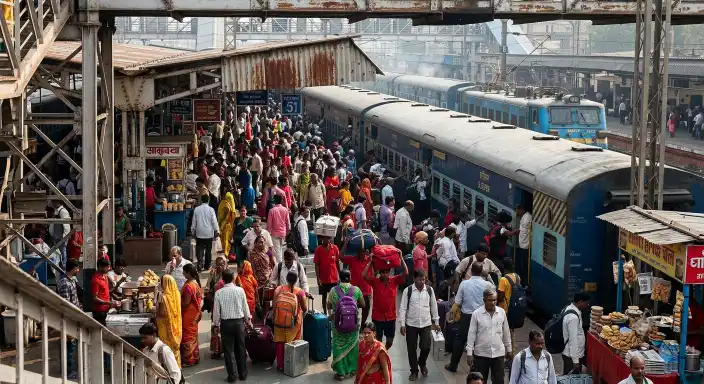
The country’s highest-earning railway stations include several major urban and transit hubs that handle large numbers of passengers and long-distance services. However, passenger volume alone does not determine a station’s revenue.
Ticket fares, the mix of long-distance and suburban passengers, premium services and the nature of train operations can all influence earnings.
Some stations generate significantly higher revenue despite recording fewer passengers than other major hubs. This highlights how the type of traffic passing through a station can be just as important as overall footfall.
The revenue rankings of India’s top railway stations reveal some striking differences between earnings and passenger footfall. New Delhi leads the list with ₹3,337.66 crore in revenue from 3.94 crore passengers, while Howrah records the highest passenger footfall at 6.13 crore but earns ₹1,692.40 crore. MGR Chennai Central and Secunderabad follow with revenues of ₹1,299.31 crore and ₹1,276.29 crore, respectively. Interestingly, Hazrat Nizamuddin generates ₹1,227.28 crore from just 1.45 crore passengers, highlighting the impact of long-distance and higher-fare services. Lokmanya Tilak Terminus, Ahmedabad, Mumbai CSMT, Pune and Anand Vihar Terminal complete the top 10, showing that passenger volume does not always translate directly into higher revenue.
The rankings provide an insight into the financial significance of India’s major railway stations and the scale of passenger business handled by Indian Railways.
