


For nearly 70 years, nuclear power generation in India was largely controlled by the government. The SHANTI Act has now opened the sector to private companies, creating a new opportunity for businesses to invest in nuclear power.
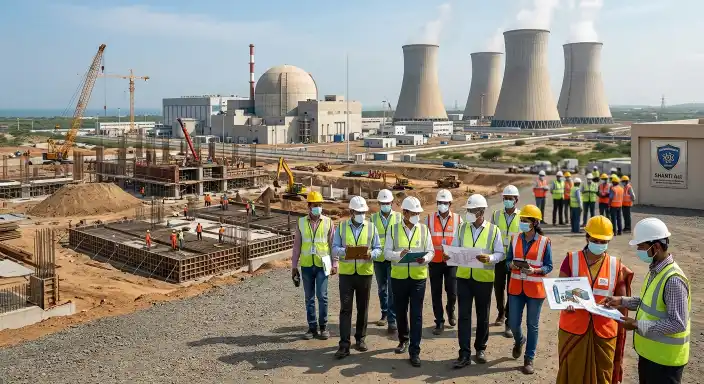
But allowing private companies into the sector is only the first step. The bigger challenge is whether companies will be willing to invest the huge amounts of money needed to help India reach its target of 100 GW of nuclear power by 2047.
India Has a 46 GW Gap
India currently has around 8.78 GW of nuclear power capacity. The government expects this to rise to about 22 GW by 2031-32 as projects already under construction are completed.
The Nuclear Power Corporation of India Ltd (NPCIL) is expected to add another 32 GW by 2047. This could take its total contribution to around 54 GW.
The remaining 46 GW is expected to come from central and state public sector companies, private businesses and joint ventures.
Private companies will not have to build the entire 46 GW. However, significant private investment will likely be needed if India wants to reach the 100 GW target on time.
Nuclear Power Needs Huge Investment
Building a nuclear power plant requires a very large amount of capital.
Amit Sharma, managing director and CEO of Tata Consulting Engineers, estimates that investment could exceed $3 million per MW. A 2,000 MW nuclear plant could therefore cost around $6 billion.
This means only a limited number of companies may have the financial strength to build large conventional nuclear reactors.
Construction time is another major challenge. According to the Department of Atomic Energy, nuclear projects can take around 10 to 12 years to build.
For private companies, this creates a major financial risk because large amounts of money could remain tied up for years before a plant starts producing electricity and generating revenue.
Companies Want More Clarity
The SHANTI Act has removed a major legal barrier to private participation, but companies still want clarity on several important issues.
These include how nuclear electricity tariffs will be decided, what returns companies can expect, who will buy the electricity and how long-term power purchase agreements will work.
Businesses are also seeking clear rules on nuclear fuel supply, fuel reprocessing, reactor technology, licensing and exclusion zones.
These issues are important because companies will need confidence that their projects can generate enough revenue over several decades to justify the huge initial investment.
Fuel Supply Is Important
Reliable access to nuclear fuel will also be essential.
Industry experts say private companies need assurance that their reactors will receive a steady fuel supply throughout their operating life.
There are also calls for a more independent nuclear regulatory system. The role of the Department of Atomic Energy may also change as private companies become more involved in nuclear power generation.
Small Reactors Could Help
Private companies may not begin with massive multi-gigawatt nuclear plants. Small Modular Reactors, or SMRs, could provide an easier entry point.
The Bhabha Atomic Research Centre is developing a 220 MW Bharat Small Modular Reactor and a 55 MW SMR. The government aims to have at least five indigenous SMRs operating by 2033.
These smaller reactors could be useful for industries that require a steady supply of electricity, such as steel plants and large data centres.
A 200-300 MW nuclear facility could potentially provide dedicated power for such industrial users instead of relying completely on electricity from the grid.
Technology Could Shape Investment
India’s nuclear roadmap includes indigenous 700 MW Pressurised Heavy Water Reactors, imported large reactors and smaller advanced technologies.
However, imported reactor designs may need certification in their country of origin as well as approval from India’s nuclear regulator.
Industry experts say lengthy approval processes could make it harder for newer technologies, particularly SMRs, to enter the Indian market quickly.
At the same time, nuclear safety requirements need to remain strict. The challenge will be to maintain high safety standards while avoiding unnecessary delays.
The 100 GW Target
India wants to increase nuclear power capacity from 8.78 GW today to 100 GW by 2047.
That means the country needs to add more than 90 GW of capacity in about two decades. Since nuclear projects can take 10 to 12 years to develop and build, many projects will need to begin well before 2047.
The government has therefore opened the door to private investment, but the next stage will be turning that opportunity into projects that companies are actually willing to finance.
The SHANTI Act has created the legal path for private participation. Clear rules on tariffs, financing, fuel, technology, regulation and construction risks will determine whether India can attract the private capital needed for its ambitious nuclear power target.
