


The Ministry of Road Transport and Highways plans to use GST payment records to identify and blacklist highway contractors involved in excessive layers of subcontracting.
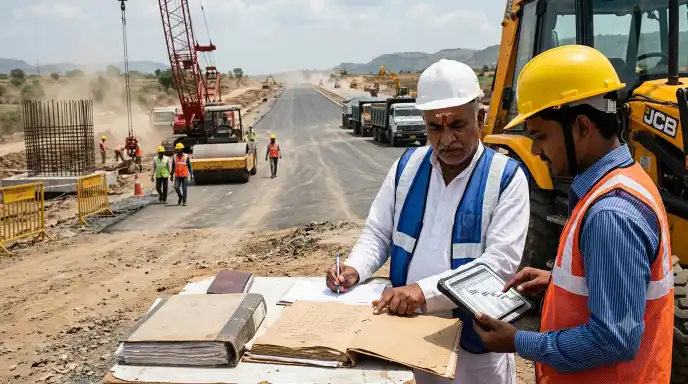
Road Transport and Highways Minister Nitin Gadkari said developers found using illegal multi-level subcontracting could face bans lasting two to three years.
The government also plans to make the action public, with Gadkari warning that exposing such companies could affect their market value and share prices.
GST Trails To Track Contractors
Gadkari said authorities could use GST payment trails to identify how project work moves between contractors and multiple subcontractors.
He pointed to cases where contracts were awarded at prices significantly below estimates and later passed through several layers of subcontractors. Each intermediary takes a margin, which can ultimately affect construction quality.
The minister said traditional financial penalties, often involving only a few lakh rupees, have not been enough to discourage such practices.
Highway Quality Is The Priority
Gadkari said the quality of highways would remain the government’s top priority, followed by controlling project costs.
The ministry is already evaluating contractors based on their past performance. The same system is now being extended to consultants responsible for preparing Detailed Project Reports.
The government is considering linking eligibility for future tenders to these performance assessments.
Concerns Over Project Reports
Gadkari also raised concerns about the quality of DPRs prepared for infrastructure projects.
He said some reports are prepared without consultants properly visiting project sites, leading to design problems, construction issues and accidents.
The minister said poor-quality DPRs can have serious consequences and suggested bringing international agencies or global standards into project report preparation.
Major Tunnel Projects Planned
The ministry is preparing tunnel projects worth between Rs 2 lakh crore and Rs 2.5 lakh crore, according to Gadkari.
He said India will need to develop its own tunnel boring machine manufacturing capacity as the high capital cost of such equipment remains a major challenge.
Gadkari encouraged Indian companies to enter the sector, citing strong future demand for tunnel boring machines across infrastructure projects.
He also said efforts are underway to encourage German tunnel boring machine manufacturers to establish production facilities in India, with the government offering support through high-quality steel and other requirements.
The planned measures are aimed at improving highway construction quality, strengthening contractor accountability and reducing the risks created by excessive subcontracting in India’s infrastructure sector.
