


When India’s first privately built orbital rocket Vikram-1 launched successfully, millions watched the historic moment. But behind the mission was a team of engineers who worked for years on critical technologies that made the launch possible.
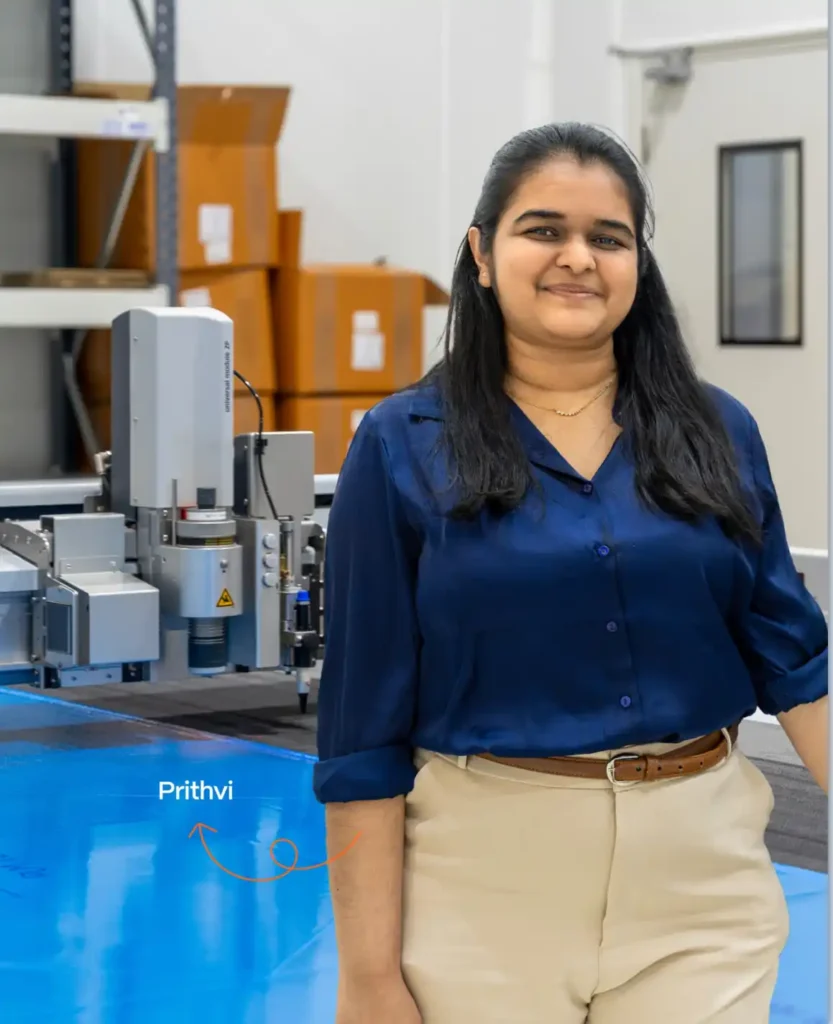
One of them was Prithvi Sanghani, an engineer who helped develop the autopilot control system for Vikram-1. Coming from a farming family in Gujarat, her journey from a small-town background to India’s growing private space sector reflects the power of education, determination and persistence.
From Gujarat Village to Aerospace Engineering
Prithvi’s journey began in Jamnagar, Gujarat, where she grew up in a farming family. After completing her engineering degree in Rajkot, she decided to specialise in a challenging field that few students choose: Missile Technology.
She later completed her master’s degree in the subject from Pune, building expertise that helped her enter India’s defence and aerospace sector.
Experience at DRDO Before Joining Private Space Industry
Prithvi started her professional career at the Defence Research and Development Organisation (DRDO) as a Project Engineer, where she contributed to India’s missile programmes.
While the role offered valuable experience, she wanted to be part of India’s emerging private space industry, which was opening new opportunities in rocket development and space technology.
Building the Autopilot System for Vikram-1
Prithvi later joined Skyroot Aerospace and became part of the team working on Mission Aagaman.
As the Control System Lead for Vikram-1’s autopilot system, she worked on one of the rocket’s most important technologies: ensuring the vehicle maintained its planned flight path during the mission.
While rocket launches attract global attention, successful missions depend on years of engineering, software development, testing and problem-solving carried out behind the scenes.
Inspiring the Next Generation of Space Engineers
India’s space sector is expanding beyond government organisations, with private aerospace companies creating new opportunities for engineers and researchers.
Prithvi Sanghani’s story shows that students from smaller towns and ordinary backgrounds can contribute to advanced technology projects with the right skills, education and dedication.
For young students interested in rockets, satellites and aerospace engineering, her journey proves that where you start does not decide where you can reach.
