


A government-backed assessment based on 2022–23 household consumption data shows that Indian diets continue to be dominated by cereals, while intake of proteins, vegetables, and fruits remains well below recommended nutritional standards set by the Indian Council of Medical Research (ICMR).
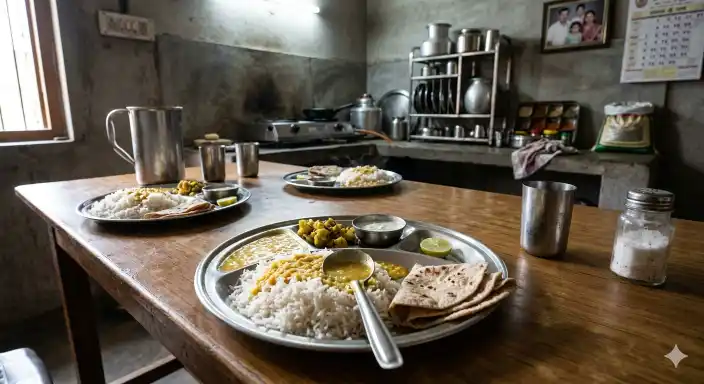
Cereal consumption far above recommended levels
The analysis, which compared household eating patterns with ICMR dietary benchmarks, found that cereal intake remains significantly higher than prescribed limits across most states. At the same time, consumption of pulses and vegetables continues to fall short of required nutritional levels.
The report comes amid growing concern over India’s dual burden of malnutrition and rising lifestyle diseases, including obesity and other non-communicable conditions, particularly in urban areas where processed food consumption is increasing.
Regional patterns show sharp imbalance
Only Kerala, along with urban parts of Punjab and Tamil Nadu, recorded cereal consumption below the ICMR-recommended monthly limit of 7.5 kg per person. Among Union Territories, Delhi, Puducherry, Chandigarh, and Lakshadweep also stayed below the benchmark.
In contrast, eastern and northeastern states showed high dependence on cereals. Rural households in West Bengal, Odisha, Tripura, and Manipur reported some of the highest intake levels, exceeding 11 kg per person per month. Similar trends were seen in Bihar, Rajasthan, and Chhattisgarh.
Urban diets also reflected continued grain dependence, with Tripura and Manipur leading cereal consumption, followed by Bihar, Arunachal Pradesh, and Chhattisgarh.
Experts link diet patterns to income and lifestyle changes
Economists and nutrition experts attribute cereal-heavy diets largely to income constraints and affordability. As incomes rise, diets typically diversify toward proteins, dairy, and fats. However, the report notes that rising consumption of packaged and outside food is also reshaping urban eating habits.
Health experts warn that these shifts, combined with sedentary lifestyles, are contributing to increasing cases of diabetes, hypertension, cardiovascular diseases, and obesity, especially among younger urban populations.
Vegetable intake remains below recommended levels nationwide
One of the key findings is the persistent shortfall in vegetable consumption across all states and Union Territories. The ICMR-recommended level of 12 kg per person per month is unmet everywhere.
Even Chhattisgarh, the highest vegetable-consuming state, falls significantly short of the benchmark. In around 15 states and UTs, monthly intake is below 5 kg per person, highlighting limited dietary diversity.
Protein deficiency widespread across India
Pulse consumption, a key protein source for vegetarians, also remains well below recommended levels. ICMR advises 2.6 kg per month for vegetarians and 1.7 kg for non-vegetarians, but data from nearly 28 states and UTs shows consumption below 1 kg per person per month.
Inflation and policy response add context
The findings come amid ongoing food inflation pressures, particularly in pulses and vegetables. The government has intervened periodically through buffer stock releases and imports to stabilize prices.
Officials are also exploring broader nutritional reforms, including diversifying food distribution under welfare schemes and promoting pulses and millets to improve dietary balance.
Policy challenge shifts from calories to nutrition
Experts note that while India has largely achieved food security in terms of calories, the next major challenge is ensuring nutritional security through more diverse, affordable, and balanced diets.
