


India has expressed serious concern over a drone strike that targeted the Barakah nuclear facility in the United Arab Emirates, warning that the incident marks a dangerous escalation in the wider West Asia conflict and calling for immediate restraint and diplomacy.
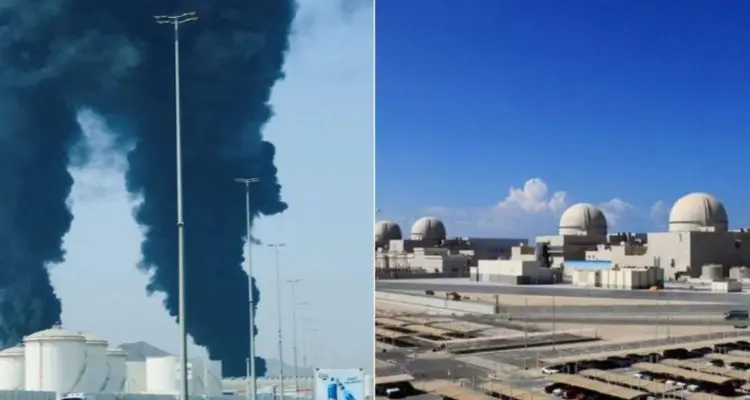
In a statement, the government said it was deeply alarmed by the attack and stressed that targeting nuclear infrastructure is unacceptable under any circumstances. It urged all parties to step back from escalation and return to dialogue and peaceful negotiation.
The strike reportedly triggered a fire after a drone hit an electrical generator located outside the inner safety perimeter of the Barakah nuclear power plant in Abu Dhabi’s Al Dhafra region. UAE authorities confirmed there were no casualties and no signs of radiation leakage. They also said the plant’s safety systems functioned as intended and normal operations continued without disruption.
The United Arab Emirates strongly condemned the incident, describing it as a terrorist attack. Officials clarified that the facility itself was not damaged, but reiterated that even attempted strikes on sensitive infrastructure pose serious risks.
The UAE Ministry of Foreign Affairs said the attack represents a major escalation and a clear violation of international law and humanitarian principles. It emphasized that peaceful nuclear facilities must be protected under international agreements, including standards set by the International Atomic Energy Agency.
The ministry further warned that such actions threaten civilian lives, environmental safety, and regional stability. It also reiterated that the UAE reserves the right to respond through all legitimate diplomatic and legal means to safeguard its sovereignty and security.
Authorities also called for an immediate end to attacks on civilian infrastructure, describing them as unjustified and unacceptable under international norms.
The Barakah plant, the first nuclear power facility in the Arabian Peninsula, is a $20 billion project developed with technical cooperation from South Korea and began operations in 2020. The incident has renewed global attention on the increasing vulnerability of nuclear infrastructure in conflict zones, a trend that has become more visible since the Russia-Ukraine war and other regional tensions involving nuclear facilities.
