


Prime Minister Narendra Modi has inaugurated the 594-kilometre Ganga Expressway, one of India’s largest greenfield expressway projects, completed in under three and a half years.
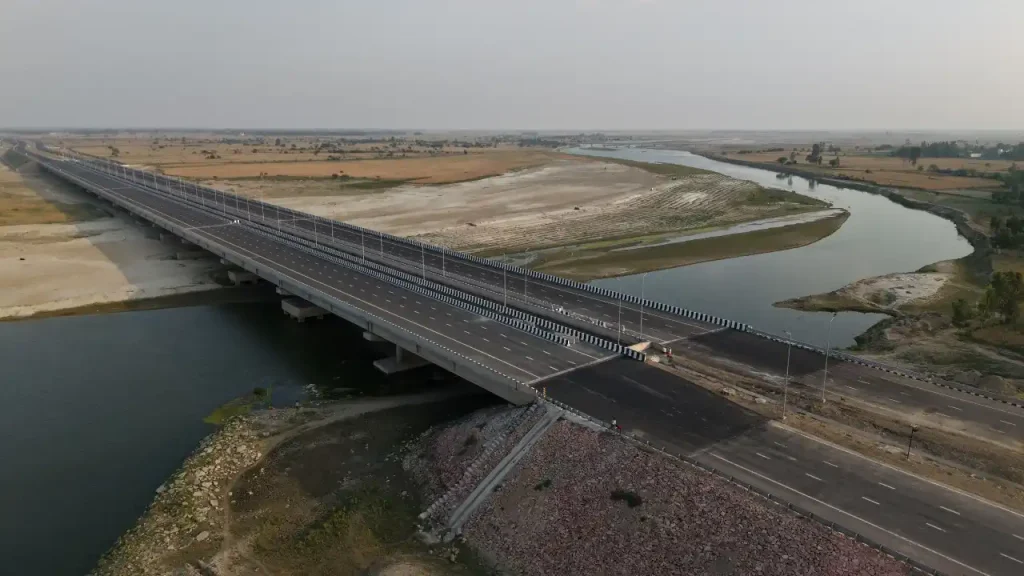
The six-lane corridor, expandable to eight lanes, connects Meerut in western Uttar Pradesh to Prayagraj in the east, significantly improving connectivity across the state.
Transforming connectivity across 12 districts
The expressway spans 12 districts and is expected to benefit more than 8 crore people by reducing travel time between Meerut and Prayagraj from around 11 hours to nearly six hours.
This major reduction in travel duration is set to improve access to healthcare, education, trade centres, and tourism hubs for millions of residents.
Economic boost for eastern Uttar Pradesh
Eastern Uttar Pradesh has historically lagged behind in infrastructure and industrial development despite its population and economic potential.
The Ganga Expressway is expected to unlock new economic opportunities by integrating the region more closely with state growth corridors, improving logistics, and accelerating trade.
According to Uttar Pradesh government estimates, the corridor could generate ₹25,000–30,000 crore in annual logistics savings, create nearly 3 lakh jobs over the next decade, and contribute over ₹1 lakh crore to the state economy.
Strategic and defence significance
A dedicated 3.5-km Emergency Landing Facility (ELF) has been built in Shahjahanpur district for the Indian Air Force, allowing military aircraft to use the expressway for emergency landings.
This addition enhances both national security and strategic infrastructure resilience.
Key role of private sector developers
Adani Enterprises through its road transport arm developed approximately 464 kilometres, accounting for nearly 80 percent of the project, while IRB Infrastructure Developers completed the remaining stretch.
At peak construction, over 12,000 workers were deployed on the Adani-developed sections.
Logistics, agriculture, and industrial gains
The expressway is expected to strengthen agricultural supply chains, allowing farmers and small businesses faster access to larger markets and better pricing opportunities.
Freight movement efficiency is projected to improve significantly, reducing fuel consumption by nearly 30 percent and lowering inventory costs for industries.
Industrial corridors and tourism growth
The Uttar Pradesh government plans to establish 11 industrial corridors along the expressway route, potentially generating millions of long-term employment opportunities.
The corridor also improves access to major spiritual and tourism destinations including Prayagraj, Varanasi, Garhmukteshwar, and Triveni Sangam, supporting both religious tourism and local economies.
A transformative project for long-term growth
The Ganga Expressway is positioned as a major catalyst for regional development, industrial expansion, and social mobility, strengthening Uttar Pradesh’s infrastructure backbone while reshaping economic geography across the state.
