


Future Point Cabs, a CSR initiative by IBS Software focused on empowering women through driving skills and employment opportunities, has completed one year of operations.
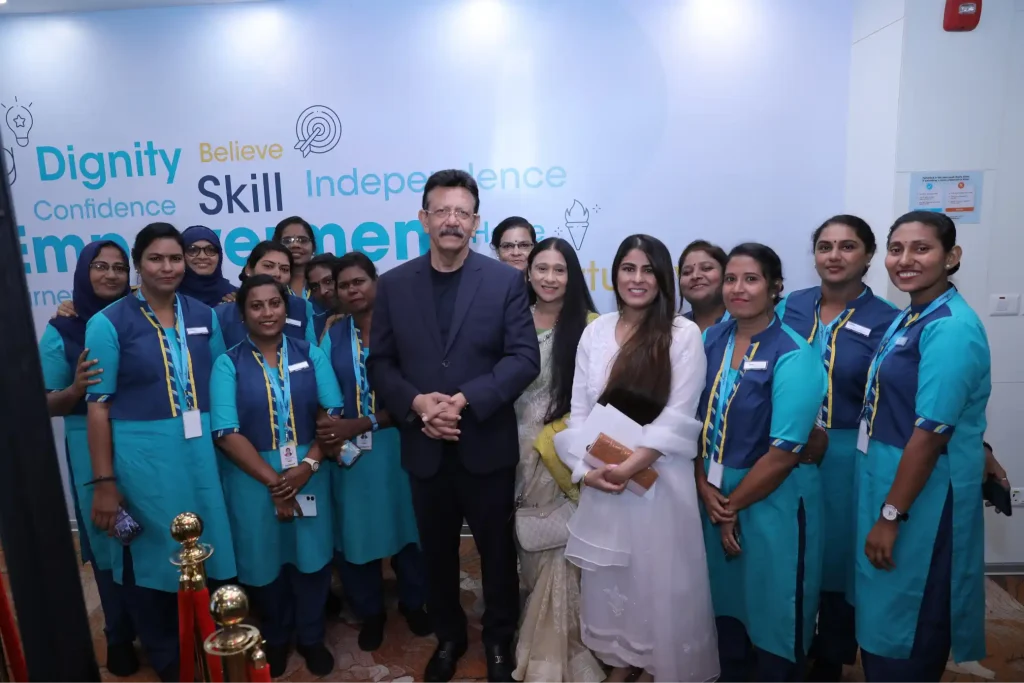
Started in Kochi, the service has grown into a functional urban mobility solution with 10 modern taxis, 25 trained female drivers, and over 4,500 completed trips in its first year.
Founder and Executive Chairman of IBS Software, Shri V K Mathews, announced plans to expand the service beyond Infopark to wider areas of Kochi. As part of the next phase, 40 more women will be recruited for driver training, with applications now open for women aged 21 to 45.
The training centre at Kakkanad, Ernakulam offers a two-month programme free of cost, including meals and learning resources. While preference is given to candidates with a valid four-wheeler licence, others without a licence are also eligible.
The curriculum focuses on safe driving practices along with hands-on road experience, aiming to prepare women for professional taxi operations.
According to Mathews, the initiative has developed into a sustainable model within Kerala’s taxi sector and has strong potential for expansion and replication in other regions. He added that it also helps address gender barriers while promoting financial independence and confidence among women.
Selected candidates will receive certification after completing the programme. High-performing drivers may earn up to ₹30,000 per month, along with access to company vehicles and performance-based incentives.
The service, accessible through the Futurepoint Cab app, has already served over 8,000 customers and maintains a user rating above 4.8, reflecting strong customer satisfaction.
In its first year, the fleet has covered around 1.57 lakh kilometres, indicating steady demand and adoption.
Beyond driving skills, the training also includes hospitality, communication, vehicle maintenance, navigation, self-defence, and financial literacy, creating a well-rounded professional development programme.
The initiative continues to position itself as a model for women-led mobility services, promoting safer transport and greater inclusion in the workforce.
