


Canada’s Prime Minister Mark Carney is expected to visit India in the first week of March, with plans to sign agreements on uranium, energy, minerals, artificial intelligence, education, and culture, according to Dinesh Patnaik, India’s High Commissioner to Canada.
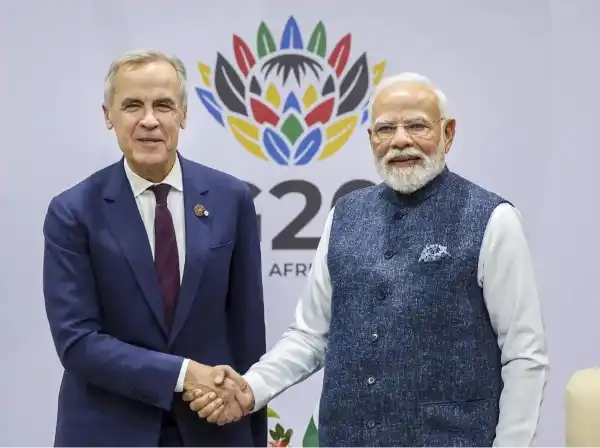
Carney has been actively working to diversify Canada’s alliances beyond the United States, the country’s largest trading partner. Last week at Davos, he received a standing ovation for declaring that the old rules-based global order is no longer functioning and urging middle powers like Canada to build coalitions to create a fairer, more resilient world.
This push follows Canada’s recent trade deal with China, which cut tariffs on electric vehicles and canola and opened up C$7 billion ($5.11 billion) in export opportunities, part of Carney’s broader effort to double non-U.S. exports over the next decade.
The visit also signals a reset in Canada-India relations after Carney’s predecessor, Justin Trudeau, accused India of involvement in the 2023 killing of Sikh separatist leader Hardeep Singh Nijjar, claims India has denied. Last year, Prime Minister Narendra Modi attended the G7 summit at Carney’s invitation, and several Canadian ministers have since traveled to India.
High Commissioner Patnaik said, “I have a feeling the first week of March is what we are looking at” for Carney’s visit. Carney’s office declined to comment, while Canada’s Energy Minister Tim Hodgson noted the timing is not yet confirmed but confirmed plans for a visit later this year.
During the trip, formal negotiations for a Comprehensive Economic Partnership Agreement (CEPA) with India are expected to begin, following a November agreement to restart stalled trade talks. Carney is also set to sign smaller deals with India on nuclear energy, oil and gas, environmental cooperation, AI, quantum computing, and education and culture. A 10-year, C$2.8 billion uranium supply deal is also likely. Hodgson emphasized that India, as a major nuclear country, plans to expand its civilian nuclear energy use, making uranium a key topic for discussion.
Between Hodgson’s visit and Carney’s upcoming trip, both countries are expected to announce agreements on energy and mining, including pacts on critical minerals, crude oil, and LNG transactions. Hodgson highlighted India’s growing demand for critical minerals that Canada can supply.
Patnaik stressed the urgency of the talks after two years of stalled negotiations, noting that countries affected by U.S. tariffs are seeking alternative trade partners. “We should work together to have an agreement that protects us from the vagaries of the international order,” he said, echoing Carney’s Davos remarks.
Meanwhile, U.S. President Donald Trump has threatened 100% tariffs on Canada if it signs a deal with China. Carney responded that Canada will respect its obligations under the United States-Mexico-Canada Agreement, which limits trade with non-market economies.
Patnaik added that India is also pursuing new agreements, including a possible CEPA with Canada within a year of formal negotiations. India’s Commerce Minister Piyush Goyal and Finance Minister Nirmala Sitharaman are expected to visit Canada soon. Additionally, India’s National Security Advisor will visit Ottawa next month to continue regular intelligence and security engagements between the two countries.
