


Import duty reductions on labour-intensive sectors such as textiles and footwear, along with concessions on cars and wines, are expected to feature in the India–European Union free trade agreement (FTA), which is likely to be announced on 27 January, according to a PTI report citing people familiar with the matter.
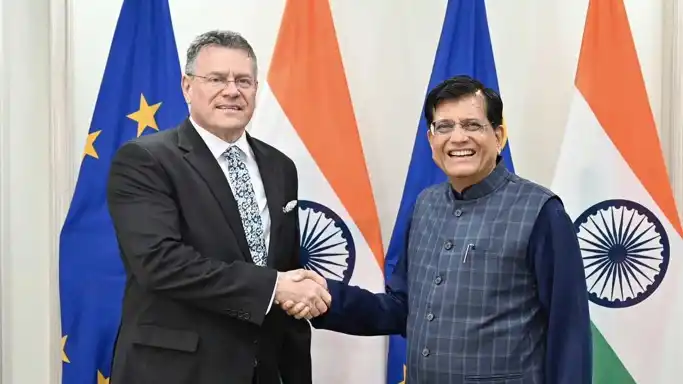
The agreement is also expected to ease regulatory norms across multiple service sectors.
India has consistently pushed for zero-duty access for labour-intensive industries including textiles, leather, apparel, gems and jewellery, and handicrafts. This demand has been a core part of India’s FTA negotiations and has been secured in deals with the UK, UAE, and Australia.
On the other hand, the EU has been seeking lower tariffs on automobiles and alcoholic beverages, particularly wines. India has already agreed to quota-based tariff reductions for automobiles in its trade deal with the UK. Wines have also been covered under India’s FTAs with Australia and New Zealand, with duty concessions on Australian wines being phased in over a 10-year period.
In September last year, Commerce Secretary Rajesh Agarwal said the proposed India-EU agreement would create significant export opportunities for India’s auto sector and encourage collaborations with major European automobile manufacturers.
Under the India-UK trade agreement signed in May 2025, tariffs on automotive imports were set to fall from over 100% to 10% within specified quotas for both countries. India built in safeguards to protect sensitive sectors, with automotive duty reductions spread over 10 to 15 years.
India and the EU are expected to formally conclude negotiations and finalise the FTA on 27 January, ending talks that began in 2007. The EU currently imposes average tariffs of about 3.8% on Indian goods, though labour-intensive products face duties closer to 10%. India’s weighted-average tariff on EU imports is around 9.3%, with particularly high rates on automobiles and auto parts (35.5%), plastics (10.4%), and chemicals and pharmaceuticals (9.9%). Alcoholic beverages face duties ranging from 100% to 125%.
Sensitive agricultural sectors have been kept out of the agreement. The EU has protected its beef, sugar, and rice markets, while India has safeguarded its farm and dairy sectors due to their importance to small and marginal farmers.
Typically, an FTA involves reducing or eliminating tariffs on over 90% of traded goods, along with regulatory easing to boost trade in services such as telecommunications, transport, accounting, and auditing. Alongside the FTA, India and the EU are also negotiating agreements on investment protection and Geographical Indications. The pact spans 24 chapters covering goods and services trade.
In 2024–25, India’s bilateral goods trade with the EU stood at $136.53 billion, including $75.85 billion in exports and $60.68 billion in imports, making the EU India’s largest goods trading partner. Services trade totalled $83.10 billion, and India recorded a trade surplus of $15.17 billion. The EU accounts for about 17% of India’s total exports, while shipments to the bloc make up roughly 9% of India’s overall overseas exports.
