


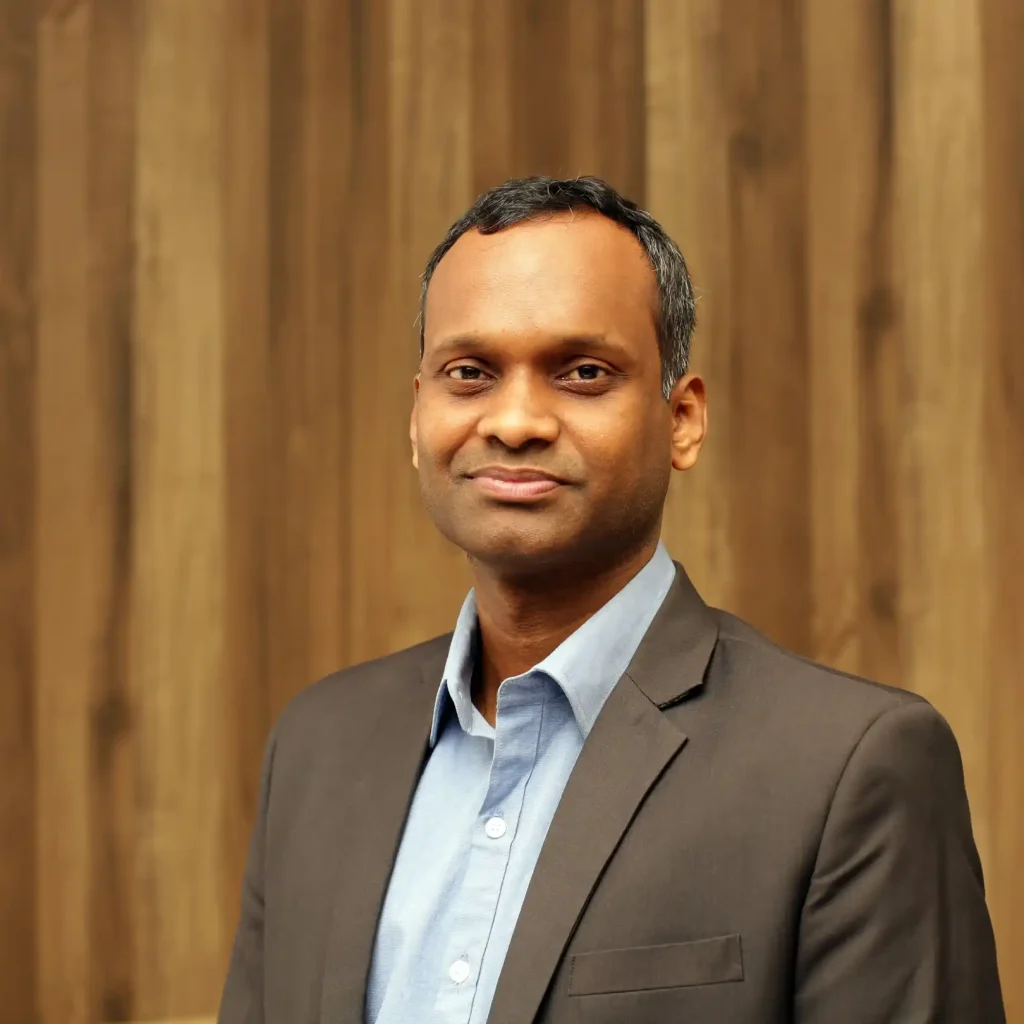
Professor Mohanasankar Sivaprakasam of IIT Madras has been awarded the Rashtriya Vigyan Puraskar 2025 in the Vigyan Yuva-Shanti Swarup Bhatnagar category for Technology and Innovation. The recognition honors his pioneering work in affordable medical devices, brain mapping, and healthcare technology designed to reach underserved communities.
As director of the Healthcare Technology Innovation Centre and the Sudha Gopalakrishnan Brain Centre at IIT Madras, Professor Sivaprakasam has spent years translating advanced research into practical, indigenous technologies. Speaking to India Today, he emphasized that the award celebrates the ability to conduct cutting-edge research in India and turn it into real-world, commercially viable products.
His centres have executed projects worth ₹300–400 crore over 15 years, initially funded by the government but now largely supported by private sources, demonstrating a successful model of research amplified beyond public funding.
Innovations Transforming Rural Healthcare
Among his notable contributions is the Mobile Eye Surgical Unit, popularly known as the ‘Hospital on Wheels.’ This truck-based operating theatre has performed over 30,000 cataract surgeries across 225 rural sites in 14 years without a single adverse event. The unit incorporates precision engineering to maintain sterility, including controlled air, water, and vibration management, alongside intelligent monitoring systems.
Eye PAC, another innovation, leverages AI-powered image computing to provide cost-effective ophthalmic screening. The devices, now operational in 2,900 sites across 40 countries, have conducted over 12 million adult eye exams and screened more than 800,000 newborns for retinal issues.
VITALSENS, a clinical-grade wearable system, monitors fever and cardiovascular health. Unlike typical hobbyist wearables, these devices are grounded in physics and physiology, ensuring clinical accuracy and supporting large-scale public health initiatives.
ARTSENS, a novel image-free vascular ultrasound, provides early detection of arterial ageing markers at a fraction of traditional costs. Using mathematical modeling of reflected waves, it enables high-precision diagnostics without expensive imaging equipment, validated in 8,000 patients and moving toward FDA approval.
Advancing Medical Equipment and Robotics
Other innovations include Insight, India’s first high-definition bronchoscopy processor, the SmartEye endoscopy platform bridging import gaps, and a disposable ureteroscope that halves costs and infections. DISHA X, India’s first fully indigenous robotic spine surgery system, has received approval from the CDSCO. A machine-learning framework also helps hospitals reduce carbon footprints and improve operational sustainability.
Mapping the Human Brain
At the Sudha Gopalakrishnan Brain Centre, Professor Sivaprakasam’s team has developed cellular-resolution 3D atlases of entire human brains, including the DHARANI foetal atlas. Using light and digital microscopy, the centre images entire brains at 20-micron sections, a feat recognized internationally and freely shared for global research collaboration.
A Vision for the Future
Looking ahead, his initiatives aim to serve 50 million patients annually through affordable image-guided robotic systems, heart preservation devices, and innovations from more than 20 startups. Professor Sivaprakasam’s work exemplifies how technology, compassion, and indigenous innovation can combine to create transformative impact in healthcare.
