


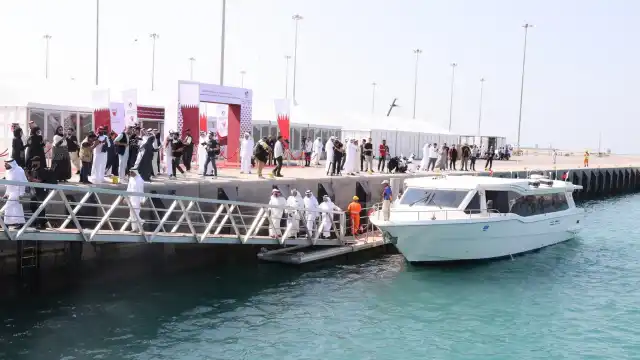
Qatar and Bahrain have opened a new chapter in regional connectivity with the launch of a direct ferry route between Al-Ruwais Port and Sa’ada Marina. The new maritime link, which cuts the journey across the Gulf to about an hour, represents more than a transport upgrade—it’s a move toward deeper regional integration, stronger economic ties, and closer cooperation within the Gulf Cooperation Council (GCC).
A new maritime bridge across the Gulf
The regular passenger ferry service, jointly inaugurated by Qatar’s Minister of Transport Sheikh Mohammed bin Abdulla Al Thani and Bahrain’s Minister of Transportation and Telecommunications Dr Shaikh Abdulla bin Ahmed Al Khalifa, spans roughly 65 kilometres between the two countries. The service operates standard and VIP vessels that carry between 28 and 32 passengers, following full customs and security procedures on both sides.
Tickets can be booked through the MASAR electronic platform, with economy-class round trips priced at QR265. The route will first serve GCC nationals, with two daily round trips in the initial phase before expanding service based on demand.
Beyond transport: strengthening regional cooperation
Officials from both countries described the project as a strategic milestone that goes beyond improving mobility. It’s expected to boost tourism, trade, and logistics, while enhancing the efficiency and sustainability of transport links within the GCC.
Sheikh Mohammed said the initiative reflects the strong ties between Qatar and Bahrain and underlines their shared goal of advancing regional integration. The Undersecretary of Qatar’s Ministry of Transport, Mohammed Abdullah Al Maadeed, called it an example of how transport can drive long-term economic development.
Towards a connected Gulf future
The ferry route marks a step forward in building a unified and resilient GCC transport network. By combining safety, efficiency, and convenience, the project highlights the region’s broader vision of a more connected and cooperative Gulf. The Al-Ruwais–Sa’ada connection is expected to become an essential link for travellers, symbolising renewed partnership and growing interdependence between the two nations.
