


The Ministry of Civil Aviation has instructed the Airports Authority of India (AAI) to reduce landing and parking charges at non-major airports by 25% to help curb the sharp rise in domestic airfares amid the ongoing West Asia crisis. The move is part of a broader effort by the government to support airlines struggling with higher operational costs caused by disruptions in fuel supplies and soaring global jet fuel prices.
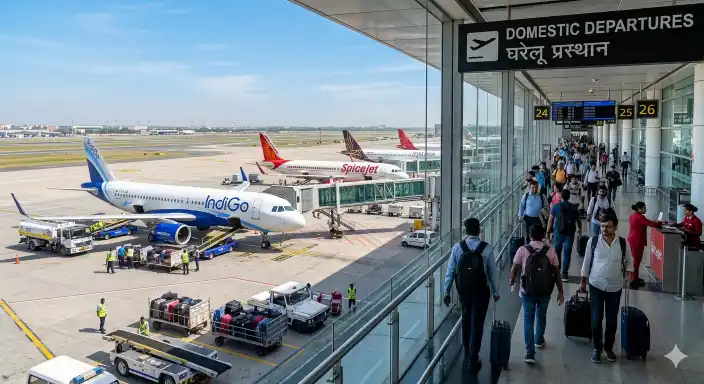
25% Reduction for Domestic Flights
According to the ministry, the reduction in landing and parking charges — which form part of the aeronautical tariff — will apply immediately to all domestic flights at non-major airports and will remain in effect for three months. The government will review the measure before the period ends to decide on any extensions or adjustments. The Airports Economic Regulatory Authority (AERA) has also been directed to implement a similar 25% reduction at all major airports under its jurisdiction. These combined steps are expected to lower airport-related costs for airlines by roughly ₹400 crore over the three-month period.
Rising Fuel Costs Drive Airline Charges
The directive comes as airlines have been forced to increase fuel surcharges due to the spike in aviation turbine fuel prices caused by geopolitical tensions in West Asia. The Air India group recently revised its fuel surcharge structure for both domestic and international flights, citing a near doubling of global jet fuel prices. According to the International Air Transport Association (IATA), the global average price for jet fuel rose from USD 99.40 per barrel at the end of February 2026 to USD 195.19 per barrel for the week ending March 27, 2026. IndiGo also introduced a fuel charge on its domestic and international routes effective March 14, 2026, attributing the move to a sharp rise in fuel costs amid the Middle East crisis. IATA data indicates an 85% increase in fuel prices for the region.
Expected Benefits for Passengers
By lowering airport landing and parking charges, the government aims to reduce operational expenses for airlines, which in turn should help prevent further escalation in domestic ticket prices. Officials say this is part of a multi-layered approach to ensure air travel remains affordable during this period of uncertainty.
