


India has approved a $25 billion defense modernization package, one of its largest in recent years. The plan includes additional S-400 air defense systems from Russia, remotely piloted strike aircraft, and new transport planes.
The Defense Acquisition Council, led by Defense Minister Rajnath Singh, cleared the approvals. The move reflects India’s urgent focus on strengthening air power along borders with China, Pakistan, and Myanmar, especially in light of lessons from the 2024 India-Pakistan conflict.
S-400 Air Defense Expansion
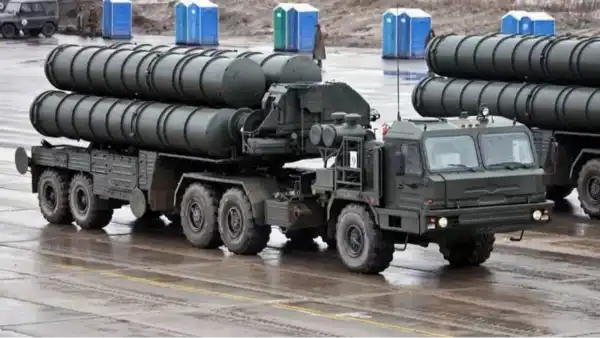
India will procure five more S-400 Triumf systems from Russia, adding to the five ordered in 2018. Three of the original systems are deployed along northern and western borders, while two are scheduled for delivery this year.
The S-400 proved effective during last year’s India-Pakistan clash, successfully intercepting missiles and drones. The new systems aim to close coverage gaps and expand India’s long-range air defense network. Dinakar Peri, a Carnegie India security fellow, noted the S-400’s performance has given New Delhi confidence to expand the fleet. Once all ten systems are in place, the S-400 will form the backbone of India’s air defense network.
Strike Drone Procurement
The package also includes 60 remotely piloted strike aircraft, reflecting a global shift toward unmanned warfare. These drones will enable precision strikes while reducing risk to pilots. The Russia-Ukraine war and India’s brief conflict with Pakistan last year reinforced the importance of drones and layered air defenses in modern combat. The drones will support offensive counter-air operations, coordinated strikes, and intelligence, surveillance, and reconnaissance missions.
Short-Range Air Defense
India recently signed a $47 million deal for the Tunguska missile system from Russia, designed to defend against low-altitude threats like helicopters, drones, and cruise missiles. This addresses a key gap in India’s short-range air defenses.
Transport Aircraft Replacement
A major portion of the package will fund 60 new multirole transport aircraft to replace aging planes. Reliable air transport is critical for operations in high-altitude mountains and remote islands. Likely contenders include Brazil’s Embraer, Lockheed Martin from the US, and Russia’s Ilyushin, with the final selection pending.
Russia’s Continued Role
While India is diversifying its defense imports toward France, Israel, and the US, Russian equipment remains significant. Defense analyst Rahul Bedi explains that Russian platforms are affordable, durable, and familiar, making them hard to replace. Indian forces have extensive experience with Russian hardware, which performs reliably across extreme climates from the Himalayas to the desert.
Record Spending and Strategic Urgency
This $25 billion package follows the recent $40 billion deal for 114 Rafale fighter jets, signaling a rapid push to modernize India’s military. Former Defense Ministry adviser Amit Cowshish notes that as nations increasingly avoid ground warfare, air power is becoming central to strategy.
India, the world’s fifth-largest military spender and second-largest arms importer after Ukraine (according to SIPRI), is accelerating efforts to close capability gaps with renewed urgency.
