


Building on the success of Vande Bharat passenger trains, Indian Railways is preparing to launch high-speed freight services using Vande Bharat-based freight trains. According to sources, the Integral Coach Factory (ICF) in Chennai will roll out the first prototype of the Vande Bharat Freight EMU for testing this week.
The prototype will undergo thorough evaluations by the Research Designs and Standards Organisation (RDSO) before entering service. Tests will include oscillation checks, emergency braking distance assessments, and full-load performance trials.
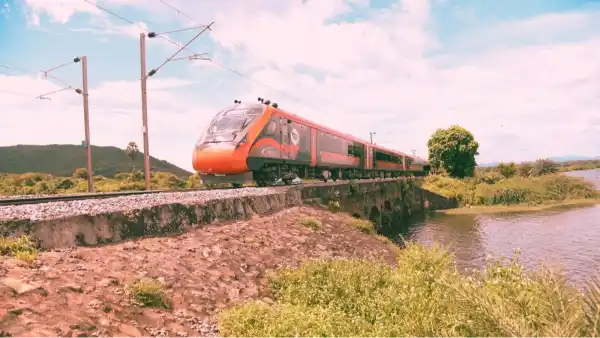
Key Specifications of Vande Bharat Freight Trains
- Maximum speed: 160 km/h
- Payload capacity: 264 tonnes (16-car rake)
- Distributed power: 50% (EMU configuration)
- Door type: 1800 mm automatic plug doors
- Floor system: Pneumatic roller floor
- Cargo: Palletised containers, including temperature-controlled (reefer) units
- Manufacturer: ICF, Chennai
- Trial oversight: RDSO, Lucknow
The 16-car EMU rake is designed to transport up to 264 tonnes of palletised cargo at speeds up to 160 km/h, a significant improvement over conventional freight trains that typically run below 100 km/h. The first operational corridor will connect Delhi NCR and Mumbai, one of India’s busiest logistics routes.
Engineered for Speed and Efficiency
A notable feature is the reefer container capability, which allows fast, temperature-controlled transport of perishables, pharmaceuticals, fresh produce, and dairy items that have traditionally depended on road transport.
The wide automatic plug doors and pneumatic roller floors facilitate rapid mechanised loading and unloading at dedicated terminals, cutting turnaround times and making rail freight more competitive with road logistics.
Strategic Importance
If trials are successful, the Vande Bharat Cargo EMU could serve as a model for other high-density freight corridors across India, representing a major shift in the modernization of the national railway and its role in the logistics sector.
