


Indian Railways has announced a major upgrade of facilities at 76 high-traffic stations to ensure smoother travel for passengers, particularly during peak periods such as summer holidays, festivals, and large events like the Maha Kumbh. Railway Minister Ashwini Vaishnaw outlined the new measures aimed at making journeys safer and more comfortable. Under the updated rules, passengers on the waitlist will no longer get direct platform access; instead, they will first enter designated waiting areas for regulated entry.
Key measures being implemented include:
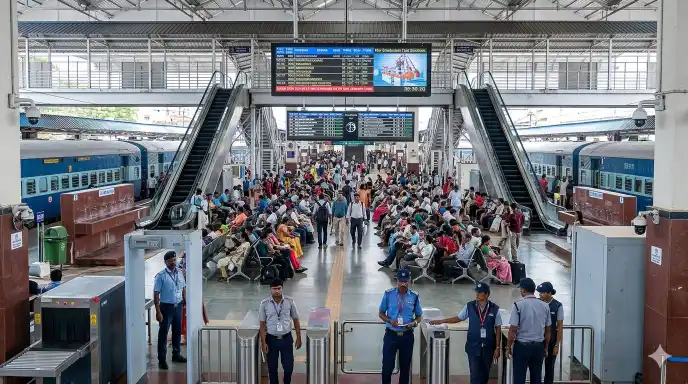
- Holding Areas – Similar to New Delhi Railway Station, passenger holding areas are being introduced at 76 stations to reduce platform congestion. These areas will feature seating, drinking water, toilets, ticketing counters, information displays, and security checks to handle peak-hour crowds.
- Access Control – Passengers with confirmed tickets will have direct platform access, while those without tickets or on waitlists will be accommodated in external waiting areas.
- Wider Foot-Over-Bridges (FOB) – Two new standard designs for FOBs, 12 meters (40 feet) and 6 meters (20 feet) wide, will be installed across all upgraded stations to facilitate smoother movement.
- AI-Enabled CCTV Cameras – Stations and surrounding areas will see extensive installation of AI-enabled CCTV cameras to monitor crowds and improve safety.
- War Rooms – Major stations will have war rooms where officers from different departments coordinate in real time to manage crowds effectively.
- New ID Cards and Uniforms – Staff and service personnel will receive QR-based ID cards for controlled access and new uniforms for easy identification during emergencies.
- Station Director Post – A senior officer will be appointed as Station Director at major stations, with financial powers and authority over all departments to ensure unified command and swift decision-making.
These upgrades are part of Indian Railways’ efforts to modernize infrastructure, improve passenger experience, and efficiently manage heavy traffic during peak travel periods.
