


Prime Minister Narendra Modi on Friday pushed states to accelerate the shift toward alternative energy, citing rising uncertainty due to the West Asia conflict. Speaking at a meeting with chief ministers and lieutenant governors, he stressed the need to expand sources like biofuels, solar power, compressed biogas under the GOBARdhan initiative, and electric mobility, while also scaling up piped natural gas access.
He also underlined the importance of stepping up domestic exploration of oil and natural gas, calling for active cooperation from states.
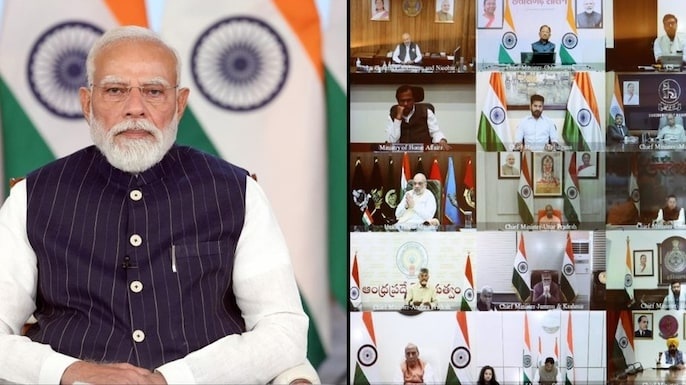
The urgency comes as the conflict in West Asia disrupts global energy flows, particularly with the blockade of the Strait of Hormuz. For India, which imports about 85% of its crude oil and ranks as the world’s second-largest importer, the risks are significant.
Modi laid out clear priorities: keep the economy stable, secure energy supplies, protect citizens, and keep industries and supply chains running smoothly. He asked states to crack down on hoarding and profiteering, and to closely monitor essential stockpiles, especially fertilizers, ahead of the Kharif season.
He also flagged the need for extra vigilance in border and coastal states, given potential disruptions to shipping and essential supplies.
Drawing on India’s experience during the COVID-19 pandemic, the prime minister said the situation remains fluid and demands constant monitoring and flexible responses. He called for tighter coordination between the Centre and states, with faster information sharing and joint decision-making.
Modi warned against misinformation, urging authorities to ensure the steady flow of accurate updates to prevent panic. He also highlighted risks from online fraud and fake agents during such crises.
States with citizens in West Asia were asked to activate helplines, appoint nodal officers, and set up district-level support systems to assist affected families and keep communication channels open.
At the same time, states were advised to continuously review developments at both the chief secretary and district levels to enable quick responses.
Defence Minister Rajnath Singh, who also attended the meeting, said the government is working to ensure adequate LPG supplies and has taken steps such as reducing excise duties on petrol and diesel.
The situation has been further complicated by disruptions following US-Israel strikes on Iran and Tehran’s retaliation, which have strained global supply chains and raised concerns over LPG availability in India. In response, the government has increased the minimum gap between LPG bookings and boosted commercial LPG allocations to support industries.
Reinforcing the need for unity, Modi urged states to act firmly against black marketing and ensure uninterrupted supply chains. The blockade of the Strait of Hormuz remains a key concern, as it is a critical route for India’s energy imports.
The meeting, held virtually, brought together several chief ministers and senior Union ministers, including Amit Shah and Rajnath Singh, to review preparedness and align responses.
In parallel, the government has moved to calm public anxiety. Petroleum minister Hardeep Singh Puri dismissed rumours of a nationwide lockdown, calling them baseless and harmful.
Overall, the message from the Centre was clear: stay coordinated, act quickly, and keep systems running without disruption as the global situation evolves
