


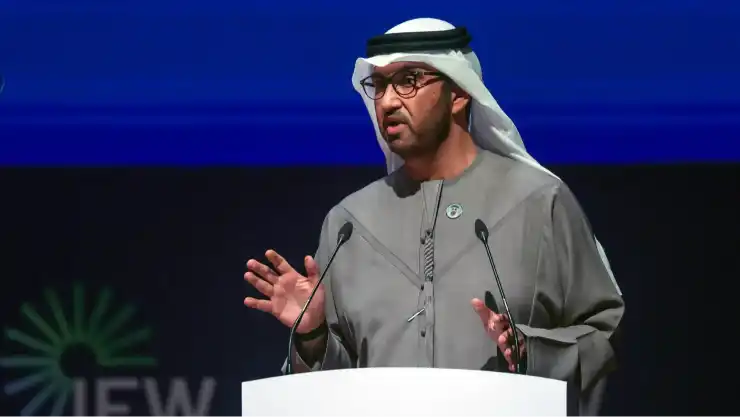
The United Arab Emirates has strongly denounced Iran’s recent attacks on shipping in the Strait of Hormuz, describing them as a form of “economic terrorism” that threatens global trade. “Weaponizing the Strait of Hormuz is not an act of aggression against one nation alone,” said Sultan Ahmed Al Jaber, CEO of Abu Dhabi National Oil Company (ADNOC). “It is economic terrorism against every nation, and no country should be allowed to hold Hormuz hostage, not now, not ever.” Al Jaber delivered his remarks via video at S&P Global’s CERAWeek conference in Houston, Texas, after cancelling his in-person appearance due to the ongoing war.
Strait of Hormuz: The World’s Energy Artery
The Strait of Hormuz is one of the most crucial sea routes for oil transport. Prior to the conflict, about 20% of global oil and liquefied natural gas flowed through the narrow waterway. Iran’s attacks on shipping in the Persian Gulf have brought tanker traffic to a near standstill, disrupting global energy markets. “While we appreciate efforts to stabilize markets and reduce prices, let us be clear — this is not a supply issue,” Al Jaber emphasized. “It is a security issue, and it has only one durable solution: keeping the Strait open.”
Regional CEOs Cancel Conference Appearances
The war’s escalation has forced several top oil executives to withdraw from in-person participation at CERAWeek. Kuwait Petroleum Corporation CEO Shaikh Nawaf S. Al-Sabah will deliver his remarks virtually, while Saudi Aramco CEO Amin Nasser has also pulled out, according to a spokesperson and Reuters sources.
Escalation of Conflict
The conflict intensified after a joint U.S.-Israeli strike on Iran on February 28 killed the Iranian head of state, Ayatollah Ali Khamenei, along with other senior leaders. In retaliation, Iran has targeted Arab neighbors that did not participate in the attack, launching 352 ballistic missiles, 15 cruise missiles, and more than 1,700 drones at the UAE. These attacks have resulted in eight deaths and 161 injuries, according to the UAE Defense Ministry. “The United Arab Emirates was hit by an attack that was illegal, erratic, unjustified, and completely unprovoked,” Al Jaber said. “We did not ask for this conflict. In fact, we took every possible step to prevent it.”
Hopes for Negotiation Amid Rising Tensions
The situation escalated further when U.S. President Donald Trump threatened to strike Iran’s power plants if it did not reopen the Strait for shipping. However, after what he described as “productive” talks with Tehran, Trump postponed the strikes for five days. The market reacted sharply: oil prices fell nearly 11% on Monday, fueled by optimism over a potential diplomatic resolution, although they had surged more than 30% since the outbreak of hostilities.
