


Kochi Metro Rail Limited (KMRL) is taking a significant step toward expanding urban water transport across India by submitting a detailed feasibility study report for implementing water metro systems in multiple cities.
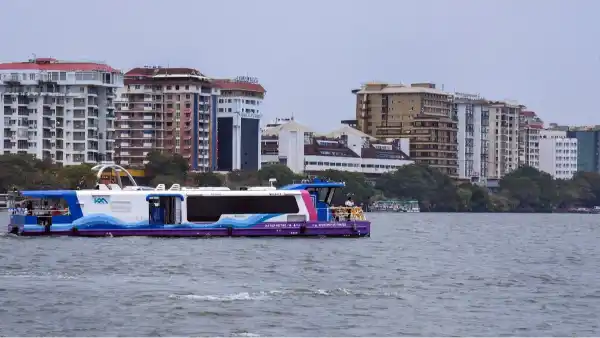
The move follows the success of the Kochi Water Metro, which has gained attention for providing a modern, comfortable, and eco-friendly commuting experience comparable to metro rail systems. The project’s strong public acceptance and international recognition have encouraged the government to explore replicating the model in other cities.
Studies Across 18 Locations
In November last year, the Ministry of Ports, Shipping and Waterways requested KMRL to conduct feasibility studies in 18 locations. These studies span 11 states and two Union Territories, covering rivers, canals, backwaters, coastal waters, and port waters.
The cities evaluated include: Srinagar, Guwahati, Tezpur, Dibrugarh, Patna, Varanasi, Ayodhya, Prayagraj, Cuttack, Ahmedabad, Surat, Goa, Mangaluru, Kollam, Alappuzha, and Andaman Nicobar. Studies for Lakshadweep and Kolkata are still underway.
KMRL’s Vision for Urban Water Mobility
KMRL Managing Director Loknath Behera highlighted the potential of water metro systems as a sustainable, technology-driven urban mobility solution. “The Kochi Water Metro has demonstrated that such transport can be viable. The submission of these feasibility reports marks the beginning of a larger national journey,” he said.
Behera added that if KMRL is entrusted with project preparation and implementation in other cities, it could evolve into a national and global centre of excellence in urban water mobility.
Expanding to Mumbai
KMRL has also submitted a detailed project report (DPR) to Maharashtra for introducing a Water Metro system in the Mumbai Metropolitan Region, marking another step toward wider adoption of urban water transport.
Consultancy Revenue and Resource Management
By leveraging its existing human resources and ensuring ongoing projects were not affected, KMRL has generated ₹8 crore in consultancy revenue through these feasibility studies. Officials noted that this approach demonstrates the organisation’s capacity to scale its expertise while maintaining operational efficiency.
