


The Indian Navy is making a major move to modernise its helicopter fleet with the planned acquisition of 60 UH-M helicopters, a ship-adapted version of the proven Dhruv platform. This is one of the largest naval helicopter orders in recent years and represents a significant step in enhancing India’s maritime capabilities.
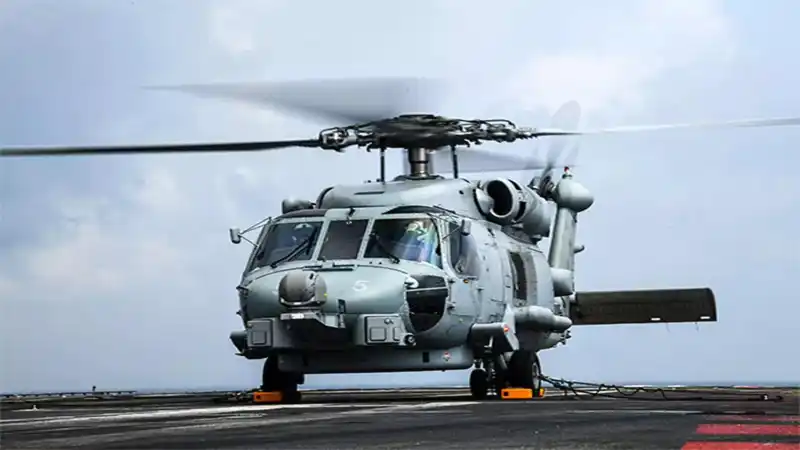
The UH-M (Utility Helicopter – Maritime) has already begun flight trials, and the programme is advancing through the certification process. HAL aims to complete certification by 2027, with production starting in 2028. The Navy could see the first helicopters joining its squadrons by the end of the decade, gradually replacing older models and expanding rotary-wing capacity across ships and carriers.
What makes the UH-M unique is its design for ship operations. Its foldable rotor blades and tail boom allow it to fit into the limited hangar space on destroyers, frigates, and carriers, making deck handling faster and easier in challenging sea conditions.
The helicopter is engineered for durability in maritime environments. Its upgraded gearbox handles high power demands reliably, even in hot, humid, and salty conditions, and during deck take-offs and landings on moving ships.
The UH-M is highly versatile in its missions. It comes equipped with a nose-mounted AESA radar optimised for maritime surveillance, able to track multiple surface targets simultaneously. Beyond monitoring, it can perform search and rescue (SAR) operations, medical evacuation (CASEVAC), and cargo delivery to resupply ships or remote locations.
For the Indian Navy, the UH-M is more than a helicopter—it’s a homegrown platform that blends the proven Dhruv design with maritime-specific upgrades. These refinements improve logistics, allow faster maintenance, and enable local system upgrades as operational needs evolve.
Pilots benefit from improved handling and mission equipment suited for naval tasks, while deck crews gain safer and quicker stowage thanks to folding features.
With ongoing tests on gearboxes, radar, and folding systems under realistic shipboard conditions, the UH-M is steadily moving from prototype to operational fleet. With the Navy’s firm order for 60 units, the programme is no longer a question of “if” but “when,” with operational deployment expected in the late 2020s.
