


Iran has assured India of safe maritime access through the Strait of Hormuz despite the escalating conflict in West Asia, with Tehran citing the long-standing friendly ties between the two countries.
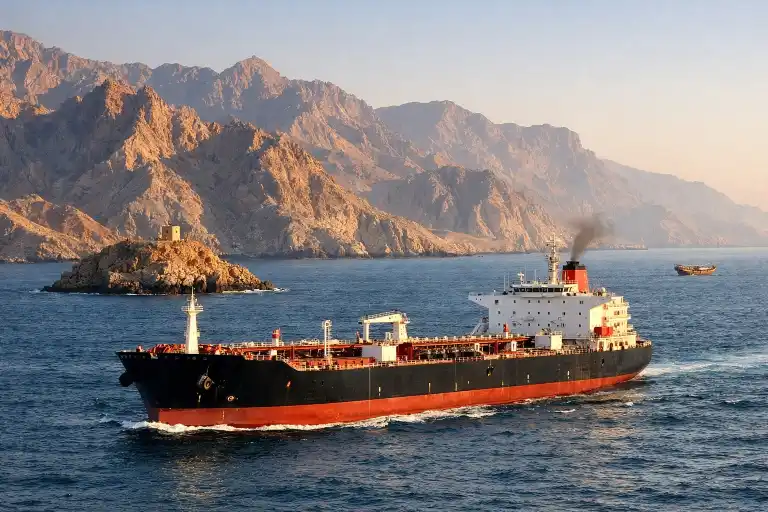
Iran’s Ambassador to India, Mohammad Fathali, said on Friday that vessels bound for India would be allowed to transit safely through the crucial shipping corridor. Responding to a question on whether Indian-bound ships would be permitted safe passage, he said Iran considers India a close partner with shared interests and a long history of cooperation.
Fathali also noted that Tehran has directed its embassy in New Delhi to assist the Indian government and facilitate operations during the ongoing regional tensions.
The assurance comes as the conflict involving Iran, Israel and the United States continues to escalate across West Asia. The crisis has raised concerns over maritime security in the Strait of Hormuz, one of the world’s most critical energy shipping routes.
Despite the tensions, Iran has allowed two Indian-flagged liquefied petroleum gas (LPG) carriers to sail through the strategic waterway, according to sources familiar with the development. In addition, a crude oil tanker carrying Saudi Arabian oil is expected to reach India after passing through the strait earlier this month.
Indian authorities earlier said several Indian vessels were operating near the area. Officials from the Ministry of Ports, Shipping and Waterways indicated that more than two dozen Indian-flagged ships were positioned around the Strait of Hormuz, with some vessels temporarily stranded during the hostilities.
The shipping corridor remains vital for India’s energy security. Nearly 85–90 percent of India’s LPG imports from West Asia, including supplies from Saudi Arabia and Qatar, pass through the Strait of Hormuz.
The narrow channel links the Persian Gulf with the Gulf of Oman and is considered one of the world’s most important oil chokepoints. According to the U.S. Energy Information Administration, roughly 20 million barrels of oil move through the passage every day, accounting for about one-fifth of global consumption. The route also handles around a fifth of the world’s liquefied natural gas trade, much of it originating from Qatar.
Strategically located islands such as Hormuz Island, Qeshm Island and Larak Island give Iran a commanding position over the busy waterway, underscoring why developments in the strait closely impact global energy markets.
