


Travelling through the Western Ghats today offers passengers an experience filled with digital menus, QR codes, branded water bottles, and a wide range of meal options. But a look back to the 1990s reveals a very different journey, one defined by simplicity, practicality, and regional flavours.
Before the formation of the Indian Railway Catering and Tourism Corporation (IRCTC), food on trains was managed by zonal railways, pantry cars, station refreshment rooms, and private contractors. There was no online booking of meals, no branded bottled water, and no curated apps to guide choices. Passengers relied on what the train or the station vendors could provide.
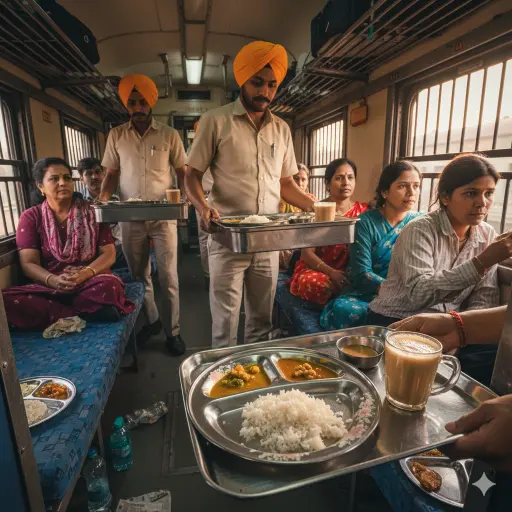
Meals were served on steel trays or melamine plates, with tea in thick glass tumblers. Regional differences shaped breakfast: aloo paratha with curd in the north, idli, pongal, or upma in the south. Veg thalis were standard, often including rice or chapatis, plain dal, one vegetable curry, and a spoon of pickle. Rice-based dishes like pulao or khichdi were common on overnight journeys.
Snacks and light meals added variety. Vendors passed through coaches with samosas, cutlets, sandwiches, and kachoris, while pakoras were sold at major stations. Non-vegetarian options existed but were limited, including omelettes, egg curry, and occasionally chicken curry or biryani. Mutton dishes were generally available at station refreshment rooms rather than on trains without pantry cars.
Desserts were simple and portable: soan papdi in boxes, gulab jamun in syrup tins, besan ladoos in paper, alongside cream and glucose biscuits shared between passengers. Hawkers sold bananas and oranges during station halts. Bottled water was mostly available at large stations, with many travellers carrying metal flasks to refill at taps.
Despite its limitations, the 1990s railway menu offered a sense of place and continuity, reflecting the region it passed through and surviving the challenges of heat, distance, and motion. Unlike today’s digitalised options, the pantry car then promised familiarity and reliability, which many passengers valued more than variety or convenience.
For travellers looking back, the simpler, regionally rooted railway meals of the 1990s remain a nostalgic reminder of a journey where food was an experience, not just an accessory to travel.
