


The Defence Research and Development Organisation (DRDO) has shortlisted three contenders for the Advanced Medium Combat Aircraft (AMCA) project: Tata Advanced Systems Ltd as a standalone bidder, a consortium of Larsen & Toubro and Bharat Electronics Ltd, and a consortium of Bharat Forge, BEML Ltd, and Data Patterns. These firms have been chosen to design and develop prototype models of India’s proposed fifth-generation stealth fighter.
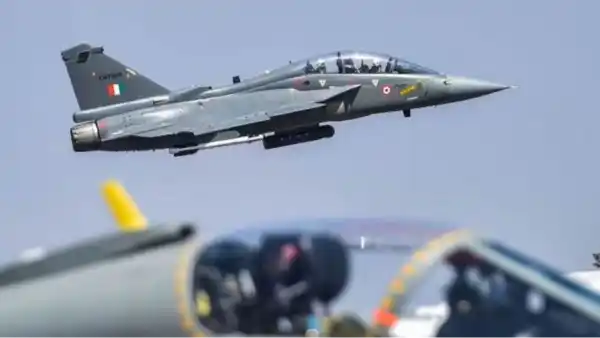
The AMCA is envisioned as a single-seat, twin-engine jet featuring advanced stealth coatings and internal weapons bays. The programme aims to produce more than 125 aircraft, potentially ready for induction into the Indian Air Force by 2035. With this, India would join an exclusive group of nations operating fifth-generation fighters, alongside the US (F-22, F-35), China (J-20), and Russia (Su-57).
Tenders for the project were floated in July 2025 through the Aeronautical Development Agency under DRDO. Initially, seven consortiums, including Adani Defence and HAL, had submitted bids. The shortlisted companies are expected to receive government funding to develop prototype models before production and manufacturing rights are awarded.
The AMCA project is part of India’s broader push to modernise its Air Force, including upgrades in weaponry and equipment. In line with this effort, the Defence Acquisition Council (DAC), chaired by Defence Minister Rajnath Singh, recently approved the purchase of 114 Rafale jets from France, with 90 of them to be manufactured in India featuring 50% indigenous content. The approval came ahead of French President Emmanuel Macron’s visit to India from February 17 to 19.
Additionally, the DAC cleared the acquisition of six more P8I maritime surveillance and anti-submarine warfare aircraft from the US for the Navy.
State-owned HAL reportedly made a paperwork error during its bid, which was a mandatory criterion rather than just part of evaluation. While this prevents HAL from being shortlisted initially, sources indicate that the company developing the prototype will have a distinct advantage in moving forward. HAL’s CMD, DK Sunil, confirmed that the Bengaluru-based company plans to participate in the license manufacturing stage for the AMCA even if its consortium is not selected in the prototype round. He emphasized that the AMCA is a 10-year programme, and HAL intends to bid when fresh tenders are issued for production.
