


Indian Railways’ push for rapid electrification has sharply reduced diesel consumption, lowered dependence on imported crude oil, and expanded cleaner rail operations across the country. According to Railways Minister Ashwini Vaishnaw, electrification now covers around 99.4% of the Broad Gauge network, with the remaining sections slated for completion soon.
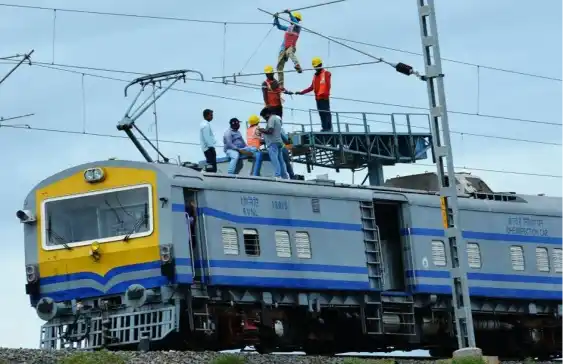
Between 2016-17 and 2024-25, Indian Railways saved 178 crore litres of diesel—a 62% reduction—thanks to the shift toward electric traction, which is both environmentally friendly and more cost-efficient than alternatives like bio-diesel. The pace of electrification has accelerated dramatically in recent years: while about 21,801 route kilometres were electrified over nearly six decades before 2014, 46,900 kilometres have been electrified between 2014 and 2025 alone. Since 2023-24, 10,932 kilometres have been electrified as of January 2026. All new lines and multi-tracking projects are now being planned with electrification as a standard feature.
Major Railway Zones Fully Electrified
Several railway zones—including Central, Eastern, Northern, Western, East Coast, East Central, South Central, South Eastern, South East Central, and West Central Railways—have achieved 100% electrification. Konkan Railway and Kolkata Metro are also fully electrified. A few zones are nearing completion, such as North Western Railway (99%), Northeast Frontier Railway (99%), Southern Railway (98%), and South Western Railway (96%).
At the state level, 25 states and Union Territories have fully electrified networks. Rajasthan stands at 99%, Assam at 98%, Tamil Nadu and Karnataka at 97%, and Goa at 91%, indicating a near nationwide transition to electric traction across major freight and passenger corridors.
Investment and Operational Benefits
Over the five years from 2020-21 to 2024-25, Indian Railways invested Rs 29,826 crore in electrification projects, including work in Tamil Nadu. Completion timelines depend on external factors such as forest clearances, terrain challenges, utility shifting, statutory approvals, law and order issues, and weather conditions.
The transition to electric traction has reduced India’s energy import burden and improved operational efficiency. Total traction energy expenditure in 2024-25 was Rs 32,378 crore. While bio-diesel has been tested previously, electric traction remains the most cost-effective and environmentally sustainable option.
Waste Management and Passenger Comfort
Alongside electrification, Indian Railways is enhancing waste management and cleanliness infrastructure across trains and stations. Waste collected onboard is properly disposed of at designated en-route stations, and on-board staff are prohibited from dumping waste on tracks, with penalties for violations. Rag-picking and cleanliness drives along tracks are conducted regularly.
Stations have been equipped with plastic bottle crushers, two-bin segregation systems for biodegradable and non-biodegradable waste, and infrastructure such as sewage treatment plants, effluent treatment plants, and material recovery facilities. Municipal collaboration ensures proper disposal according to local feasibility, while passenger awareness campaigns encourage responsible waste handling under the Swachh Bharat Abhiyan.
Bio-Toilet Expansion
To further improve hygiene, bio-toilets have been installed to eliminate direct human waste discharge from trains. Between 2004 and 2014, 9,587 bio-toilets were installed. Since 2014, over 3.61 lakh bio-toilets have been fitted in passenger coaches, ensuring safer and cleaner train travel.
