


As drone warfare transforms modern conflict, questions have emerged about the future of traditional attack helicopters. However, India and Israel are demonstrating that platforms like the AH-64E Apache still play a decisive role in high-intensity warfare.
The AH-64E variant represents the most advanced evolution of the Apache family. It features upgraded engines, improved composite rotor blades, enhanced data-link systems and the powerful Longbow radar, enabling it to detect, classify and engage multiple targets in all weather conditions.
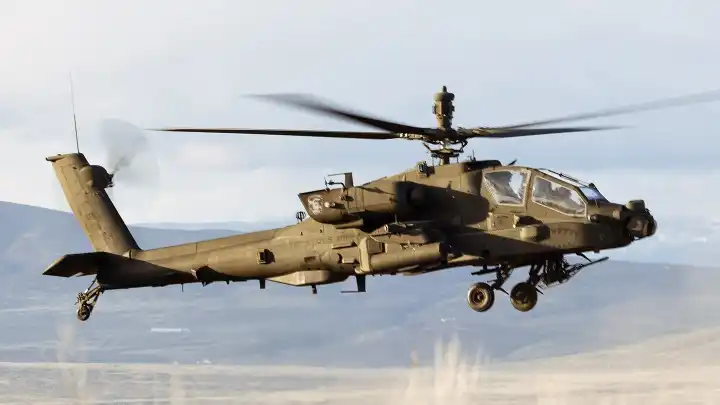
One of its most significant advantages is Manned-Unmanned Teaming (MUM-T), which allows Apache pilots to control drones, receive real-time battlefield data and conduct coordinated strikes. This integration ensures that helicopters remain relevant even as unmanned systems expand their footprint.
For India, Apaches strengthen operational readiness along strategic borders and in high-altitude terrain, where rapid response and precision targeting are critical. The helicopter’s ability to operate at night and in adverse weather conditions adds a vital edge.
Israel, drawing from extensive operational experience, continues to deploy Apaches for targeted missions, reinforcing the aircraft’s reputation for accuracy and survivability.
While drones are increasingly central to modern warfare, the Apache’s blend of firepower, mobility, survivability and digital integration ensures that it remains a formidable component of contemporary air combat strategy.
