


On February 10, 2026, a magistrate court in Mansa, Gandhinagar convicted journalist and activist Ravi Nair for criminal defamation in a case filed by Adani Enterprises Limited. The ruling has sparked renewed debate about freedom of expression, accountability, and digital governance in India.
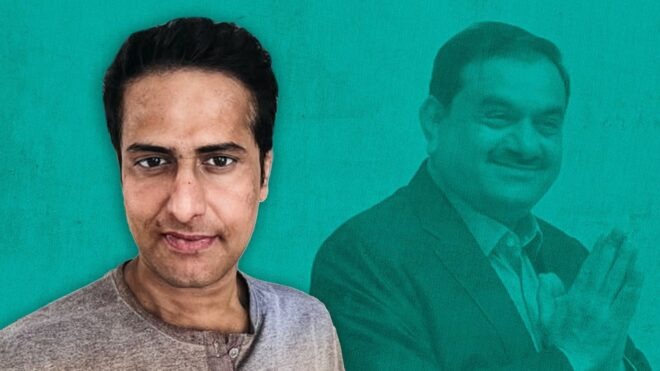
The dispute began when Adani Enterprises claimed that Nair had shared a series of tweets containing false and damaging statements about the company. The prosecution argued that the posts went beyond fair criticism, constituting definite allegations circulated widely online. After examining the evidence, the court concluded that Nair’s statements crossed the line of lawful commentary and caused reputational harm, thus meeting the legal threshold for criminal defamation.
Ravi Nair is known for his decades-long work in journalism and human rights activism. He has been actively involved with civil liberties organizations both in India and internationally, including Amnesty International, where he served as regional liaison and global campaign coordinator. Nair also co-founded the Association for Protection of Democratic Rights in 1994 and later established the South Asia Human Rights Documentation Centre, a key institution for human rights research in the region.
The court highlighted that as a journalist, Nair had a heightened responsibility to exercise caution, particularly in the fast-moving world of social media. While acknowledging this, the magistrate decided against granting probation, emphasizing the importance of upholding the law.
Nair was convicted under Sections 499 and 500 of the Indian Penal Code, which define defamation and prescribe its punishment, including imprisonment of up to two years, a fine, or both. The court sentenced him to one year of simple imprisonment and imposed a fine of ₹5,000, viewing this as a proportionate response to the offense.
The verdict underscores the courts’ stance on reputational harm in the digital era, signaling stricter accountability for public figures, journalists, and commentators whose statements are unverified or legally overstep the bounds of permissible criticism.
