


Swiss luxury watchmaker Rado’s global CEO Adrian Bosshard has said that while the India-European Free Trade Association (EFTA) trade agreement, effective October 2025, offers a price advantage for consumers, the depreciation of the Indian rupee has largely offset these benefits. Without the agreement, he noted, Indian buyers would have faced significantly higher prices for Swiss-made watches.
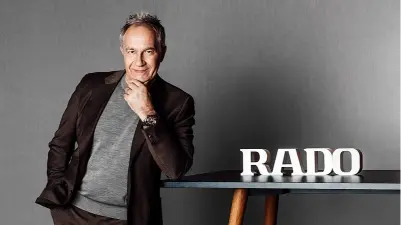
“Any trade deal that lowers taxes is good for consumers, as they pay for the product and not the taxes. But with the Swiss franc being strong and the rupee weakening, the impact is limited,” Bosshard told ET during his visit to India.
Under the Trade and Economic Partnership Agreement (TEPA) signed in 2024 with Switzerland, Norway, Iceland, and Liechtenstein, India is gradually reducing import tariffs on Swiss watches from 22% to zero over seven years. Bosshard welcomed the agreement, saying it benefits both the Swiss watch industry and Indian customers.
However, the currency situation remains a challenge. The rupee has been falling, hitting a record intraday low of ₹92.02 against the US dollar on January 30, due to capital outflows, trade deficits, and global imbalances, while the Swiss franc has gained over 16% against the dollar in the past year.
“This strong currency affects all exports, making products more expensive. It’s something industries have to adapt to,” Bosshard explained. Despite this, the trade deal has helped maintain some price stability in India.
Rado, part of the Swatch Group—the world’s largest watchmaker with 16 brands including Breguet, Omega, and Tissot—has seen India become its largest market in 2024, surpassing China and the US, driven largely by the ₹1 lakh–5 lakh affordable luxury segment.
The Indian luxury market is projected to grow from $7 billion in 2024 to $30 billion by 2030, according to Deloitte. The report highlights that 47% of Indian consumers buy watches from multi-brand platforms or online marketplaces, compared with 24% globally.
Bosshard attributed Rado’s growth in India to rising economic growth, population, education levels, and increased access to information on luxury goods through digital channels. “Consumers in India are increasingly aware of premium products, driving demand,” he said.
Rado watches will continue to be produced in Switzerland, he emphasized, as Swiss manufacturing is integral to the brand’s credibility and reputation. The Swatch Group’s 2025 report also highlighted strong sales growth in India, West Asia, Mexico, and Poland, with double-digit increases across all price segments.
