


Indian Railways is moving toward a passenger-focused model offering faster, more comfortable, and premium travel experiences. Finance Minister Nirmala Sitharaman’s Union Budget announcement of seven new high-speed rail corridors underscores this effort to transform intercity travel.
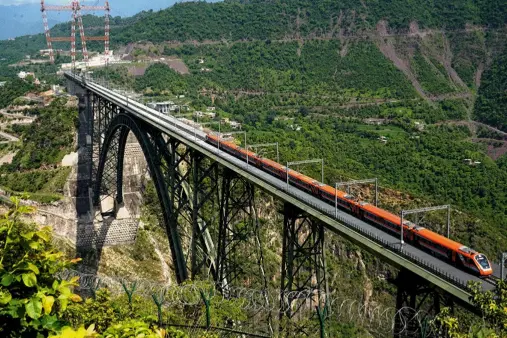
The move comes as Indian Railways upgrades overnight journeys with Vande Bharat sleeper trains, which combine speed, comfort, and modern passenger amenities, while Amrit Bharat trains improve facilities for the common traveller.
The seven new high-speed corridors are designed to serve as growth connectors, linking major economic centres across India:
- Mumbai–Pune: Travel reduced to around 48 minutes, easing congestion on one of the country’s busiest industrial corridors.
- Pune–Hyderabad: Travel time cut to roughly 1 hour 55 minutes, connecting western and southern India.
- Hyderabad–Bengaluru: Reduced to 2 hours, strengthening IT and manufacturing connectivity.
- Hyderabad–Chennai: Travel around 2 hours 55 minutes, enhancing business and inter-state mobility.
- Chennai–Bengaluru: Around 1 hour 13 minutes, improving southern high-speed links.
- Delhi–Varanasi: About 3 hours 50 minutes, boosting tourism and economic links across Uttar Pradesh and Bihar.
- Varanasi–Siliguri: Around 2 hours 55 minutes, the first high-speed rail service in eastern India, connecting key regional centres.
Experts note that these corridors will drastically reduce travel times, increase passenger capacity, and encourage a shift away from short-haul flights and road travel, while also complementing freight and conventional passenger services. The total network will cover nearly 4,000 km with an estimated investment of ₹16–20 lakh crore.
Alongside high-speed rail, the Vande Bharat Express—India’s first indigenously designed semi-high-speed train—is being expanded into sleeper variants. These trains integrate advanced safety systems like Kavach and provide overnight travel options that reduce journey times compared to traditional Rajdhani Express services. Plans are in place to launch up to 260 Vande Bharat sleeper train sets, with a long-term goal of around 4,500 trainsets by 2047.
Amrit Bharat trains focus on improving comfort, safety, and facilities for the average passenger, though they do not increase speed. Together with Vande Bharat trains, they signal a shift toward modern, efficient, and energy-conscious rail travel.
Budget proposals also aim to enhance station infrastructure, last-mile connectivity, and freight handling, supporting Indian Railways’ long-term goal of moving 3,000 million tonnes of freight.
High-speed rail and Vande Bharat sleeper trains are expected to significantly improve intercity travel, reduce journey times, and offer energy-efficient alternatives to flying, marking a major step forward in India’s rail modernisation journey.
