


Chinese aerospace developer AutoFlight has achieved a major advancement in eVTOL technology with its Matrix aircraft, the world’s first five-ton class electric vertical take-off and landing (eVTOL) vehicle designed for up to 10 passengers or heavy cargo roles. On February 5, 2026, AutoFlight completed a public full transition flight demonstration of Matrix, successfully flying the aircraft through all phases from vertical take-off to fixed-wing cruise and back to vertical landing, validating the platform’s advanced aerodynamic design, high-power electric propulsion and flight control integration.
Matrix stands out in the emerging Advanced Air Mobility (AAM) sector due to its size and capacity; most current eVTOL designs focus on smaller aircraft carrying four to six people. The aircraft’s 20-metre wingspan, 5,700 kg max take-off weight and distributed propulsion system with up to 20 lift motors provide built-in redundancy for safer operations.
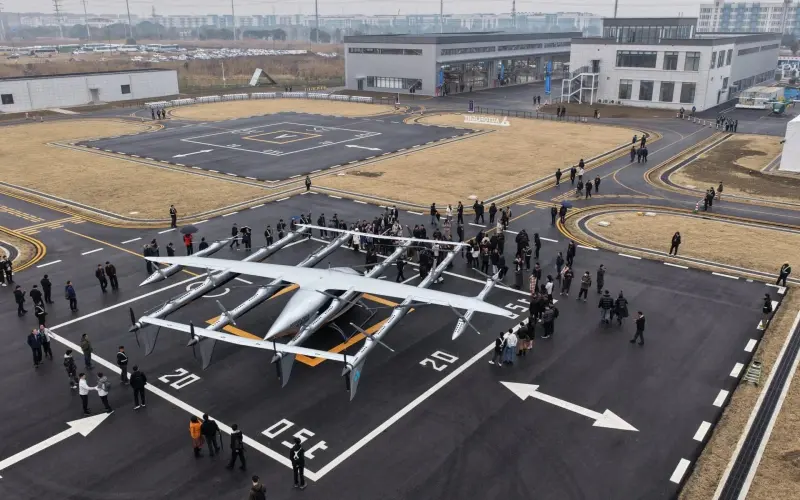
AutoFlight plans to offer Matrix in both passenger and hybrid-powered cargo variants, with flexible interior configurations including business-class layouts and VIP options. The larger cargo version is expected to carry up to 1,500 kg of payload, potentially transforming logistics transport alongside passenger service roles.
The successful transition flight marks a key milestone for the eVTOL industry, demonstrating that heavier, high-capacity electric aircraft can operate efficiently through complex flight phases. AutoFlight’s CEO Tian Yu says the Matrix platform aims to break the perception that eVTOLs are limited to short-haul, low-capacity missions, potentially reshaping future air travel and regional mobility networks.
