


Santhosh Babu highlighted Kerala’s efforts to integrate artificial intelligence and digital infrastructure into public governance, emphasizing ethical usage, robust frameworks, and democratization of technology for all citizens.
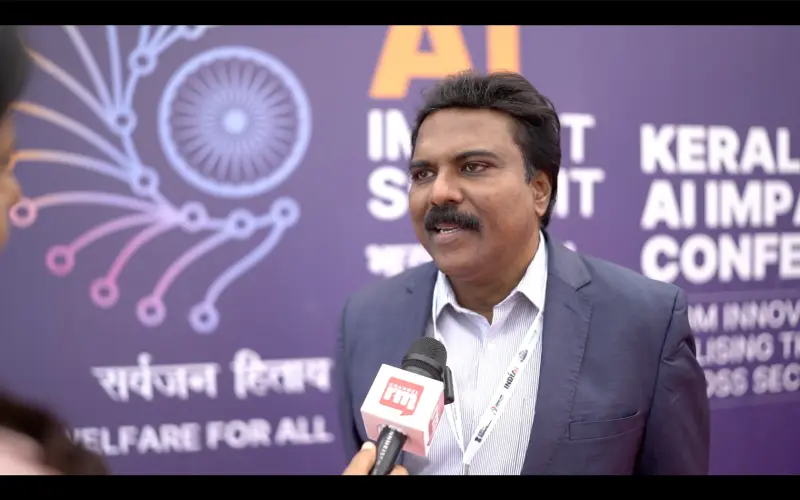
Santhosh noted that while AI tools like ChatGPT are widely used for personal purposes, deploying algorithms in public service delivery requires careful planning. Biases in AI systems could impact beneficiary selection and governance outcomes. He stressed that smart training of algorithms is essential to ensure nuanced and accurate responses, noting the principle “garbage in, garbage out.” Kerala has already begun applying this approach through initiatives like KSmart.
KSmart has revolutionized service delivery in the state. For example, building permit modules now operate with 70% automation for low-risk structures, and 91,000 certificates have been issued since the program’s launch in 2004 without human intervention. Similarly, marriage registration has been simplified so that couples can complete procedures remotely, with over 98,000 certificates issued efficiently. These initiatives save citizens considerable time and reduce the need for in-person visits to government offices.
Santhosh also discussed Kerala’s plans for predictive governance using vast amounts of collected data. The state aims to leverage AI, blockchain, and machine learning to streamline routine administrative tasks, enhance disaster management, and deliver real-time citizen alerts. The vision is to create a system where technology reduces human effort while improving accuracy and efficiency.
The K-FON project, Kerala’s ambitious broadband initiative, has connected over 1.45 lakh households, including 14,000 from the BPL section. With government funding pending for an additional 75,000 families, the network now covers 32,000 km, making it one of the most extensive in the country. The goal is to reach 10 lakh connections in the coming years, bundling value-added services like IPTV and other digital tools alongside fiber connectivity.
He emphasized the importance of bridging the digital divide, ensuring that even economically disadvantaged citizens can access technology and benefit from digital governance. Collaboration across government departments, disaster management authorities, and technology providers will be crucial to maximize the impact of these initiatives.
The overarching goal aligns with the state’s vision of building a knowledge economy, improving service delivery, and creating a connected society where technology enhances citizen welfare while ensuring ethical and efficient governance.
