


India and the United Arab Emirates are preparing to sign a major strategic defence agreement that will elevate their military cooperation to a new level. The Rafale fighter jet is set to be the centrepiece of this partnership. Once finalised, both nations will become the largest Rafale operators outside France, creating a powerful framework for interoperability, sustainment, and joint operational doctrine.
Rafale Fleet and Procurement Plans
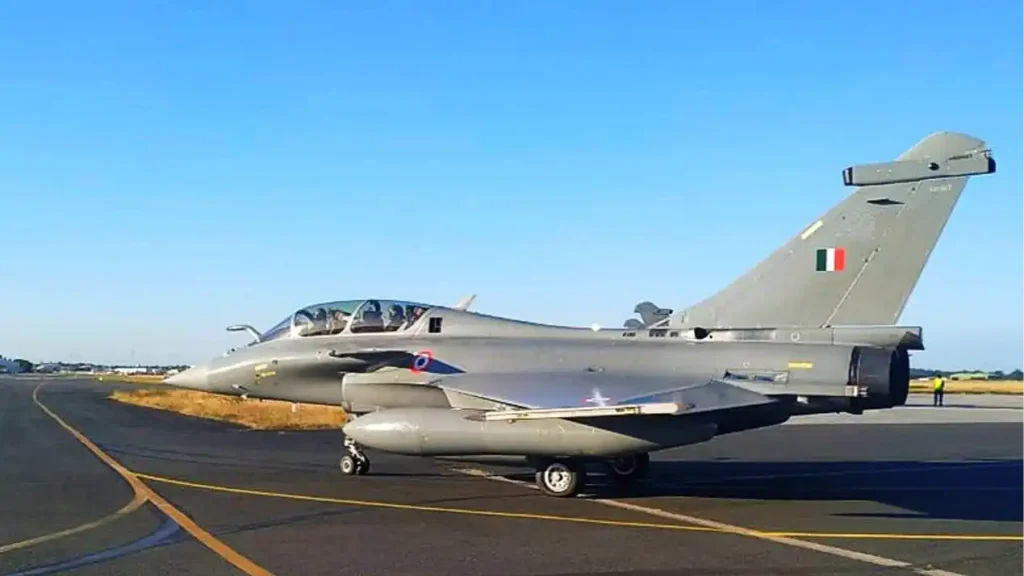
The UAE officially ordered 80 Rafale F4 jets under a historic government-to-government deal in December 2021, the largest export order in the aircraft’s history. India, which currently operates 36 Rafales, plans to acquire an additional 114 jets under its Medium Multi-Role Fighter Aircraft (MRFA) programme. Together, the two nations will operate nearly 230 Rafales, giving them significant influence over the aircraft’s global ecosystem.
Joint Maintenance and Sustainment
The defence agreement will include deep cooperation on fleet sustainment, maintenance, and lifecycle management. Both air forces are expected to collaborate on MRO frameworks, spares pooling, and shared logistics chains, which will reduce costs and improve aircraft availability.
Training and Operational Integration
A dedicated training pact is under discussion. Indian and Emirati pilots and ground crew are likely to participate in joint training programmes, with instructor exchanges between the two air forces. This will standardise operational procedures, share best practices, and harmonise mission planning and combat doctrines. Joint exercises centred on Rafale operations are expected to be institutionalised.
Indigenous Weapons and Joint Development
India is integrating a wide range of indigenous weapons on its Rafales, including the Astra Mk1 and Mk2 air-to-air missiles, future Astra Mk3, and the RudraM family of air-to-surface and anti-radiation weapons. These capabilities could be extended to the UAE fleet, enabling joint integration, testing, and certification.
Synchronised Delivery and Long-Term Integration
The UAE’s Rafales are scheduled for delivery between 2027 and 2031, while India will begin receiving additional jets from France around 2029, followed by locally manufactured aircraft from 2031 under the Make in India initiative. This alignment allows for joint training pipelines, shared sustainment infrastructure, and coordinated operational readiness.
Broader Strategic Convergence
Beyond the aircraft, the Rafale partnership reflects growing strategic convergence between India and the UAE. Defence ties over the past decade have included joint exercises, naval cooperation, intelligence sharing, and defence industrial collaboration. The new agreement will formalise and anchor these efforts around a high-end combat capability.With heavy investments in air power modernisation, the India–UAE Rafale axis is poised to become one of the most influential combat aviation partnerships outside NATO, reshaping defence cooperation in the Indo-Pacific and Middle East regions.
