


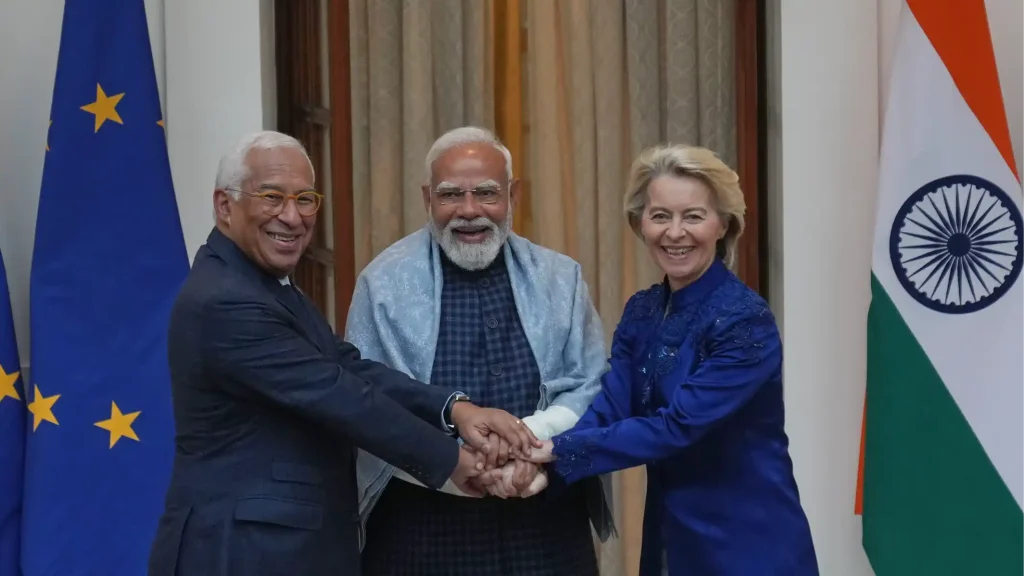
India and the European Union have finalized a historic free trade agreement, marking the largest tariff liberalisation India has ever offered to a trading partner. The deal covers economies with a combined population of nearly 2 billion, strengthening economic and political ties between the world’s second- and fourth-largest economies amid heightened global trade uncertainty.
Major Boost to Trade and Exports
The FTA is expected to significantly increase bilateral trade, with EU exports to India projected to double over time. Analysts forecast a potential rise in India’s trade surplus with the EU of over $50 billion by FY31, while domestic equity markets are seeing gains in export-driven sectors such as textiles, shrimp, and chemicals.
Sharp Tariff Reductions Across Key Sectors
The agreement eliminates or reduces duties on major imports from the EU, including machinery, electrical equipment, motor vehicles, pharmaceuticals, chemicals, aircraft, optical and medical instruments, plastics, and 22% of pearls, precious stones, and metals. Specific reductions include:
- Wine duties falling from 150% to as low as 20%
- Olive oil tariffs phased down from 45% to zero
- Duties on pasta, bread, biscuits, chocolate, fruit juices, and non-alcoholic beer eliminated
Enhanced Access to Services and Intellectual Property Protections
EU firms gain improved access to Indian services markets, particularly in finance, maritime transport, and other critical sectors. The FTA also strengthens intellectual property rights, covering copyrights, trademarks, designs, trade secrets, and plant variety rights, aligning Indian and EU IP frameworks more closely.
Focus on Sustainability, Workers, and Women Empowerment
A dedicated chapter on trade and sustainable development reinforces commitments to environmental protection, climate action, workers’ rights, and women’s empowerment. Alongside the FTA, the EU and India plan to establish a climate cooperation platform, backed by up to €500 million in EU support over two years, to aid India’s industrial transformation and reduce greenhouse gas emissions.
Support for SMEs and Industry Competitiveness
Small and medium-sized enterprises benefit from reduced regulatory barriers, transparency measures, and dedicated contact points. High tariffs on automobiles will drop from 110% to 10%, with car parts duties eliminated within five to ten years. Machinery, chemicals, and pharmaceuticals also see major reductions. Sensitive EU agricultural sectors, such as beef, poultry, rice, and sugar, are excluded, while imports must continue to meet strict EU health and food safety standards.
Implementation Timeline and Global Significance
Following legal reviews, joint signing, EU Parliament ratification, and Indian Cabinet approval, the agreement will enter into force. The deal concludes nearly 18 years of negotiations, representing India’s most ambitious market opening ever. It provides comprehensive market access, regulatory clarity, and sets a strong foundation for long-term economic collaboration between India and the EU.
Leadership Statements
European Commission President Ursula von der Leyen called the FTA historic, deepening cooperation between the world’s largest democracies and demonstrating the benefits of rules-based trade. Indian Commerce Minister Piyush Goyal highlighted the pact’s ambition, emphasizing enhanced business opportunities, job creation, and stronger India-EU strategic ties.
