


India is rapidly progressing its ambitious Samudrayaan deep-sea exploration mission, with preparations underway for the first dive of the indigenously developed Matsya-6000 submersible in May 2026. The trial, planned at a depth of 500 metres, marks a major milestone toward the project’s ultimate aim of conducting deeper manned dives and joining an elite group of nations with advanced crewed submersible capabilities.
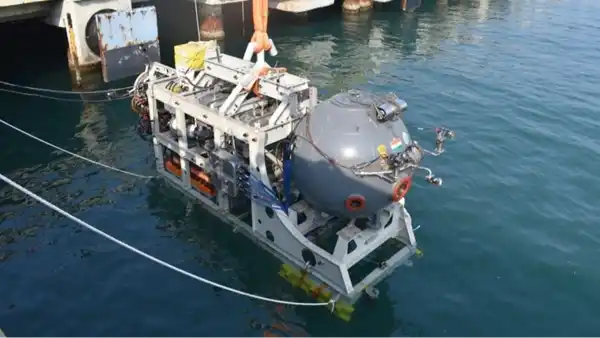
Developed by the National Institute of Ocean Technology (NIOT) in Chennai under the Deep Ocean Mission (DOM), the Matsya-6000 is a 25-tonne, human-rated underwater vehicle designed to carry a crew for scientific exploration beneath the sea. Engineers are fine-tuning systems such as pressure hull integrity, life-support modules and navigation sensors to ensure mission readiness.
Skipping intermediate shallow-water trials, the team plans to move directly to the 500-metre dive, reflecting confidence in the submersible’s indigenous design and integration work.
The Samudrayaan mission is a flagship part of India’s broader plan to boost deep-sea research, enabling studies of marine biodiversity, mineral resources and oceanographic processes, while advancing the country’s scientific and technological prowess in extreme environments.
If successful, the May 2026 dive will set the stage for deeper missions planned later in 2026 or 2027, ultimately targeting depths of 6,000 metres, and positioning India among a select group of countries capable of human-occupied deep ocean exploration.
