


Retired NASA astronaut Sunita Williams, who spent over 608 days in orbit during her distinguished 27-year career, recently opened up about two of the most unusual sights she encountered while in space.
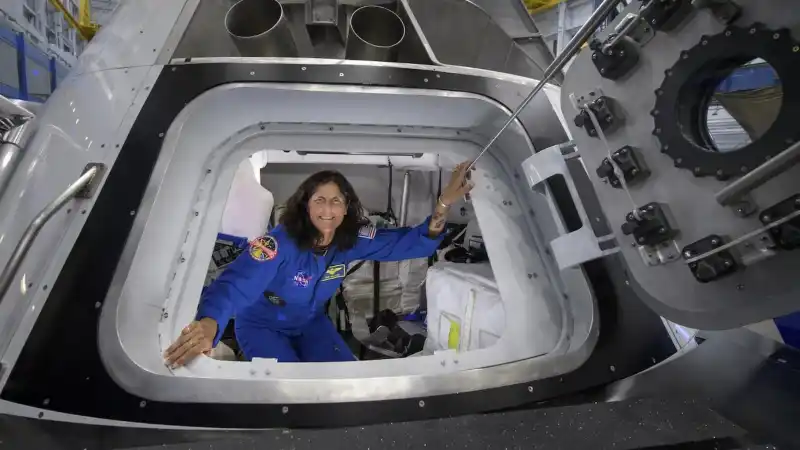
Speaking on a podcast with host Raj Shamani, Williams said one of the most striking impressions from her time aboard the International Space Station (ISS) was the sheer number of communication satellites now circling Earth. While the satellites support modern connectivity, their abundance made a lasting visual impact on her.
“The amount of stuff in orbit around the planet — a lot of communication satellites — really stood out,” she said, noting that constellations of satellites have grown significantly over recent years.
The second extraordinary sight she described was rare atmospheric phenomena known as Transient Luminous Events (TLEs), including blue jets and red sprites, which shoot up from thundercloud tops toward space. Williams explained that while these energetic flashes are difficult to see with the naked eye, onboard cameras operated by her crew mates captured stunning images of these events.
“These were phenomena I didn’t know existed in such a vivid way,” she said, highlighting how modern imaging technology has helped document these spectacular displays above Earth’s weather systems.
Williams also shared her belief in the possibility of life beyond Earth, pointing to the billions of stars in the universe and the likelihood that other life forms exist somewhere in space.
Her candid remarks provide a rare, human perspective on what it’s like to live and work on the frontier of space exploration, blending scientific insight with awe-inspiring personal experiences.
