


AI should not be feared; instead of focusing solely on what AI can do, the focus must be on who it serves, said speaker A.N. Shamsheer at the Kerala Regional AI Impact Conference, held at The Leela Raviz, Kovalam. The event aimed to evaluate AI’s practical applications across sectors as well as its social and economic impact. He emphasized that AI should be used continuously and critically, but without fear. Its value emerges only when it improves human life. Shamsheer highlighted the importance of ethical AI and spreading awareness about the technology among the public. He also stressed that potential issues in AI deployment must be taken seriously, and that clear regulations are essential. Conferences like this can serve as models for protecting citizens’ privacy, he added.
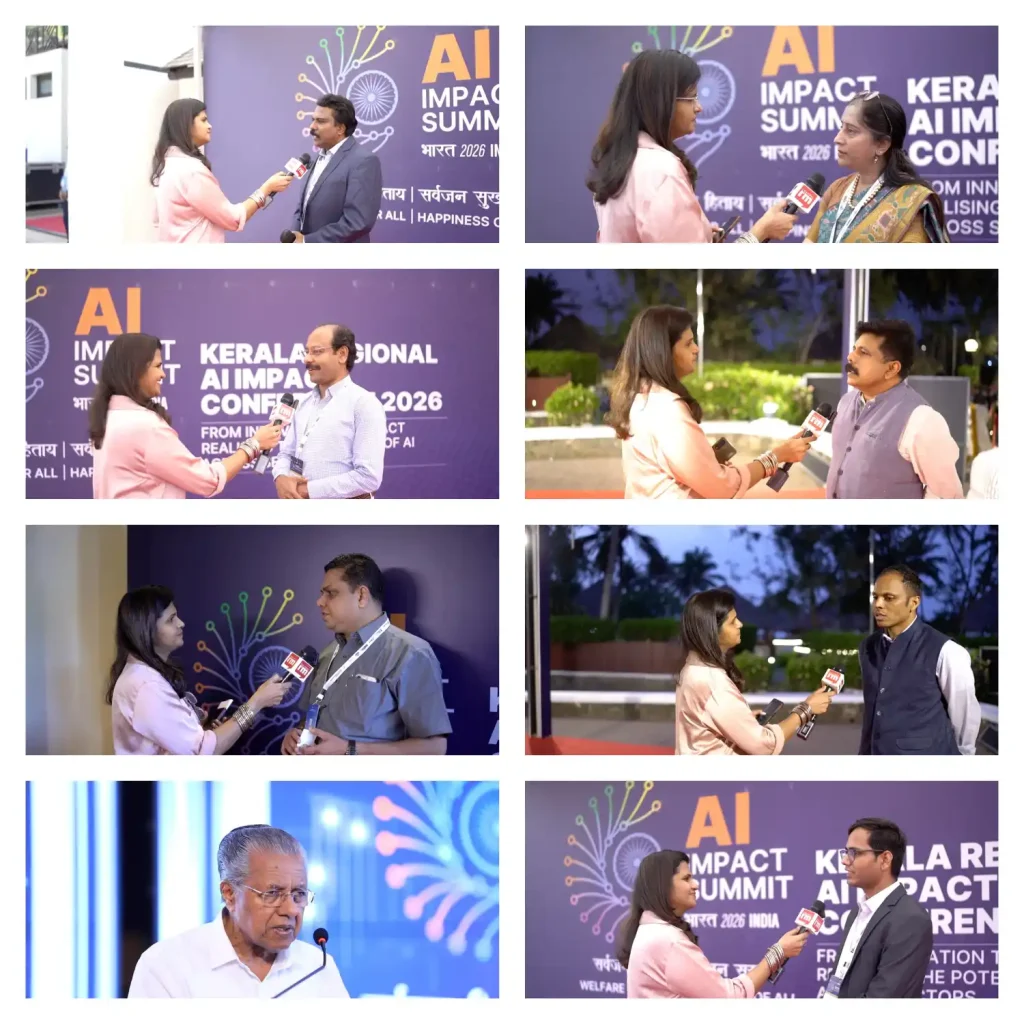
The one-day regional summit, Kerala AI Futurecon, was organized by the state government as a precursor to the India AI Impact Summit 2026 in New Delhi. Speaking at the event, Kavita Bhattia, Chief Operating Officer of the India AI Mission under the Ministry of Electronics and IT, said this year’s India AI Summit in Delhi would be historic, with India hosting it for the first time. By bringing together investors, industry leaders, startups, technologists, and students from around the world, India is demonstrating leadership that other countries in the Global South can follow. She added that over 25,000 registrations have already been completed for the New Delhi event, which is expected to host more than a lakh participants.
Seeram Sambasiva Rao, IAS, Special Secretary of Electronics & IT, Kerala, said Kerala had prepared the AI Futurecon with utmost care and professionalism. Being one of six regional events across India, it carries great significance, and the response has been very positive. AI is currently one of the most critical technologies, and Kerala now has the necessary infrastructure and support systems in place. Its benefits are already visible across multiple sectors. The government’s focus is on strengthening India’s AI capabilities, developing more solutions, and promoting the AI industry. At the same time, AI is expected to see widespread adoption in governance. There is broad agreement that AI deployment requires caution, and that its use must always serve public welfare. Strong laws and regulations will ensure social benefit, and these efforts will involve collaboration at global, national, and state levels. Many countries already have frameworks in place; India has one, and Kerala is preparing its own policy to ensure ethical and responsible AI use.
Sandeep Kumar, IAS, Director of Kerala State IT Mission, highlighted Kerala’s role in presenting a human-centric model of AI growth. He noted the risk of centralizing data, power, and wealth in the hands of a few and emphasized the importance of embedding democratic values into AI systems. As AI develops, care must be taken to prevent social inequalities, ensuring technology reaches all sections of society. Kerala will take strong action in policy and implementation, setting examples for the rest of the country.
Dr. Santosh Babu, MD of K-Fone and former IAS officer, showcased Kerala’s success with the K-SMART platform, which has already processed over a crore citizen service files across 14 modules. Some services can now process 10% of applications within an hour. Earlier, building permits required three separate software systems, causing delays; now the building permit module operates fully automatically. Since its launch on 1 January 2024, K-SMART has issued over 91,000 building permits and streamlined services like marriage certificates, with over 98,000 certificates already issued.
Anup Ambika, CEO of Kerala Startup Mission, observed that while AI is immensely powerful, it must be used with trust and responsibility. Policy frameworks ensuring ethical AI are being developed at both national and state levels. Understanding AI’s potential and risks requires firsthand interaction with actual users, including doctors, teachers, students, and creative professionals. Bringing people together to explore potential ethical challenges is essential, as no clear answers exist today. Such conferences play a crucial role in gathering insights and shaping policies that define responsible AI usage.
Sushant Kurunthil, CEO of Infopark, emphasized that Kerala can play a decisive role in promoting responsible AI. The regional summit highlighted the need for technology to address real societal challenges. Responsible AI is a key topic globally, with countries and groups like the European Union actively discussing AI regulation. AI has become a buzzword attracting wide attention, but few understand the risks of excessive use. Any technology must retain a human touch. Humans should remain at the center of technological development; technology must work around people, not the other way around. Local and national AI events, including India AI Summit and Kerala’s regional summits, should focus on human-centric and responsible AI.
Kerala’s vision and initiatives in AI were discussed in detail at the AI Futurecon, organized under the leadership of the Kerala Department of Electronics & IT in coordination with the India AI Mission and Kerala IT Mission. Official partners included Kerala IT Department, Kerala Startup Mission, Digital University, C-DIT, and iSifos. The summit brought together senior officials from India AI Mission, central and state government representatives, policymakers, technology experts, startups, academic institutions, industry leaders, investors, and international organizations.
Alongside discussions on Kerala’s AI roadmap, the event featured an AI Expo, roundtables with investors, and startup pitch sessions. Sessions focused on Responsible AI, AI for Public Good, Generative AI in Governance, Climate Resilience, and AI in Healthcare & Education, emphasizing ethical, inclusive, and practical applications of AI for society.
