


India and the European Union are set to sign a long-pending free trade agreement on January 27, ending years of complex negotiations defined by firm red lines on both sides.
The talks, relaunched in 2022 after nearly a decade of stagnation, have progressed amid shifting global trade patterns, efforts to diversify supply chains, and a shared desire to strengthen strategic economic ties.
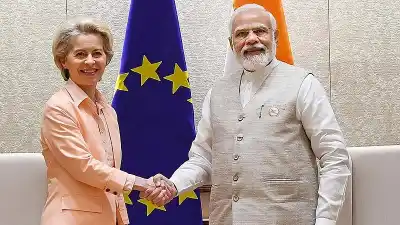
“Even as momentum has increased in recent rounds, negotiators have been careful to balance commitments to market opening with domestic priorities. The talks have been as much about managing sensitivities as expanding trade,” said a commerce ministry official.
The European Union, a 27-member bloc including Germany, France, Italy, Spain and the Netherlands, is one of India’s largest trading partners. Bilateral goods trade between India and the EU reached $130–136 billion in 2024–25, with India exporting about $75 billion and importing $65 billion. Services trade adds further value to the partnership.
India Protects Key Sectors, Seeks Gradual Opening
India has emphasized that certain sectors require special treatment under the agreement. Agriculture and dairy have remained the country’s clearest red lines, with officials citing concerns over domestic supply chains, food security, and the predominance of small-scale producers. Protecting these sectors is seen as essential to maintaining rural stability, even as India pursues gains in other areas.
India has also argued for a phased approach to tariff reductions in manufacturing, ensuring domestic industries are not suddenly exposed to import competition. At the same time, New Delhi aims to leverage the agreement to attract investment, integrate into European value chains, and expand exports in labor-intensive sectors such as textiles, garments, leather products, and engineering goods.
EU Holds Firm on Market Access and Climate Rules
The EU has maintained its key priorities, pressing for deeper tariff cuts on industrial goods, including automobiles and components, and better access for European service providers. The bloc views entry into India’s large and fast-growing consumer market as central to the economic logic of the deal.
European companies have also sought greater regulatory predictability, particularly in automobiles, chemicals, medical devices, and professional services. A core EU red line has been the retention of climate-linked trade rules, including the Carbon Border Adjustment Mechanism (CBAM) and provisions tied to the Green Deal, due-diligence requirements, and environmental standards. EU negotiators argue these rules ensure a level playing field and align trade with climate objectives.
India, however, has raised concerns that such regulations could act as trade barriers, especially for energy-intensive exports like steel, aluminum, and cement. Officials have stressed the need to safeguard Indian access to the EU market for pharmaceuticals, textiles, processed goods, and other key products while complying with sustainability commitments.
The agreement, once finalized, is expected to create one of the world’s largest trade areas, combining India’s fast-growing market with the EU’s advanced industrial base, marking a significant milestone in bilateral economic and strategic relations.
